• Home
  • About Us
  • Toolkit
  • Archives
  • Advertise
  • Privacy Policy

Kids Ain't Cheap

But They Sure Are Worth It

  • Parenting
    • Baby Stuff
    • Books and Reading
      • Aesops Fables
      • Comic Books
    • Education
    • Family Time
    • Green Living
    • Growing Up
    • Healthy Living & Eating
    • Holidays
    • Parenting
    • Random Musings
    • Shopping
    • Stuff to Do
  • Money
  • Product Reviews
    • Books and Magazines
    • Discount Sites
    • Furniture
    • House Keeping
    • Reviews News
    • Toys and Games
  • Contact Us
  • Our Editorial Commitment
  • Search

The “Unteachable” Label: How Some Students Are Quietly Flagged

June 22, 2026 | Leave a Comment

Kid In School
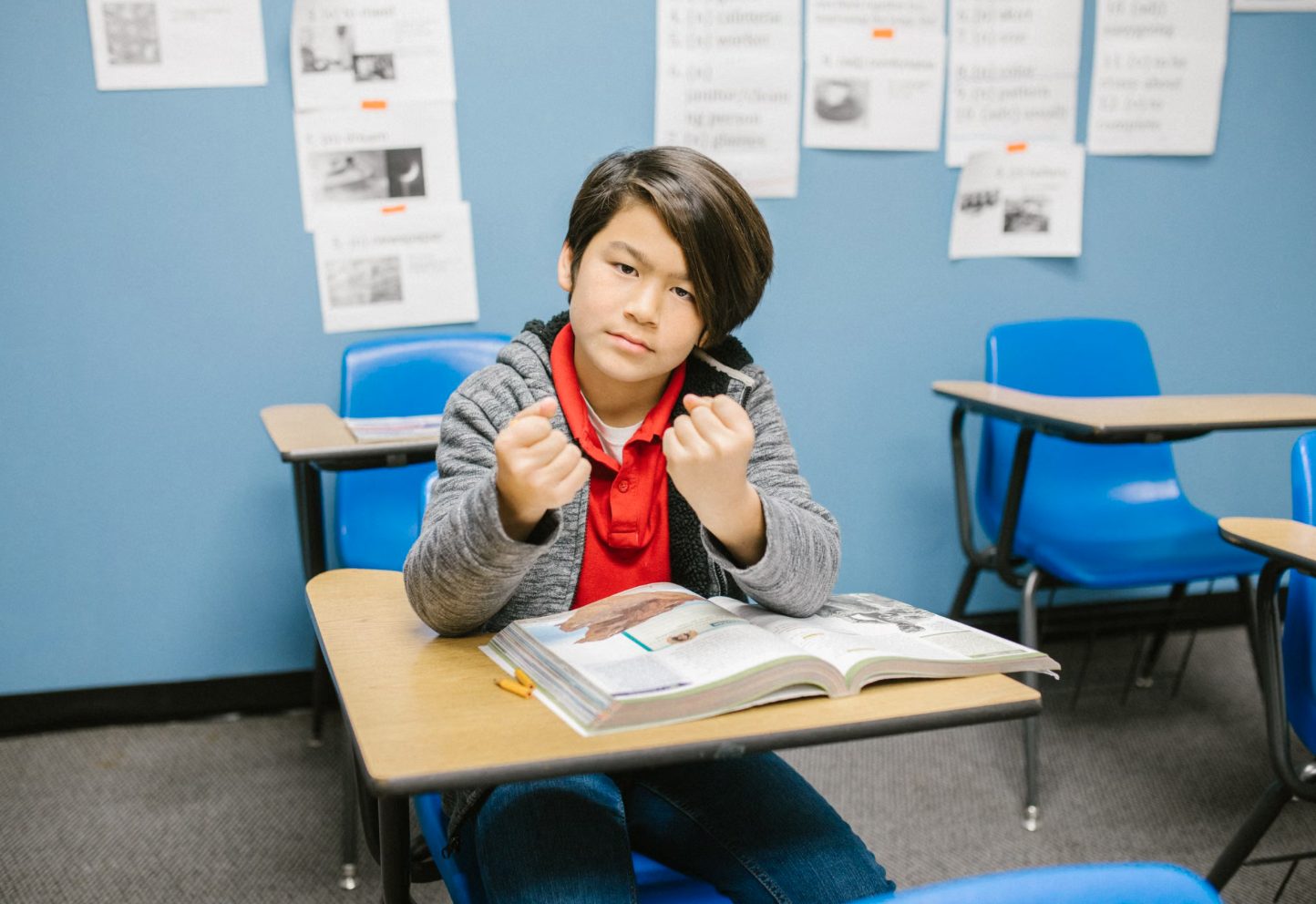
A student’s classroom behavior often tells only part of the story. Early assumptions can shape expectations, making support and understanding more important than labels. (Pexels).

Every school has students who seem to receive more warnings, more hallway conversations, or more skeptical looks than their classmates. Sometimes it happens after repeated behavioral challenges, but other times it begins with a single difficult year or a misunderstanding that quietly follows a child from classroom to classroom. While no school officially labels a student as “unteachable,” many educators and parents acknowledge that informal reputations can shape expectations long before a report card does. Those early impressions matter because research shows that teacher expectations and disciplinary patterns can influence student confidence, classroom participation, and long-term academic success.

How the “Unteachable” Label Can Quietly Take Hold

The unteachable label rarely appears in official records, yet it can develop through informal conversations, cumulative behavior notes, or assumptions shared among staff members. A student who frequently interrupts class, struggles with emotional regulation, or falls behind academically may gradually become viewed through a negative lens instead of a supportive one. Once expectations change, even positive behavior may receive less recognition than similar actions from classmates. Educational researchers have long warned that expectations can influence student performance through what psychologists call the “Pygmalion Effect,” where higher expectations often lead to stronger outcomes. That does not mean teachers intentionally give up on students, but it highlights how powerful first impressions can become.

Behavior Is Often a Signal, Not the Whole Story

Many challenging behaviors have underlying causes that are easy to overlook during a busy school day. Anxiety, learning disabilities, ADHD, trauma, family stress, or sleep problems can all affect how a child behaves in class without being immediately obvious. A student who appears defiant may actually be overwhelmed by work they cannot yet understand or embarrassed about reading aloud. Research on exclusionary discipline continues to show that removing students from learning environments rarely addresses those root causes and may actually worsen academic outcomes. The most effective schools increasingly focus on identifying why behaviors occur before deciding how to respond.

Small Decisions Can Create Lasting Consequences

Being sent out of class occasionally may seem minor, but repeated exclusions can slowly disconnect students from learning and their peers. Recent education research has drawn attention to informal classroom removals that often go undocumented, making them difficult for schools to monitor or address fairly. Students who miss instruction repeatedly can develop larger academic gaps, leading to even more frustration and behavior challenges. This cycle can leave families feeling as though their child has already been judged before receiving meaningful support. Breaking that pattern requires schools to recognize when discipline begins replacing intervention.

What Effective Schools Are Doing Differently

Many schools are moving toward restorative practices, Positive Behavioral Interventions and Supports (PBIS), and stronger social-emotional learning programs. These approaches encourage educators to understand the reason behind behavior while maintaining clear expectations and classroom safety. Teachers still hold students accountable, but they also create opportunities to rebuild trust and teach replacement skills instead of relying solely on punishment. Studies have found that schools implementing evidence-based alternatives often reduce suspensions while improving school climate and student engagement. Success depends on consistent training, adequate staffing, and collaboration between teachers, counselors, and families.

Parents and Teachers Share the Same Goal

Most teachers enter education because they genuinely want students to succeed, and most parents simply want their children to feel safe, respected, and capable of learning. Open communication can prevent misunderstandings before they become lasting reputations. Parents who ask specific questions about classroom challenges, learning needs, and available support services often build stronger partnerships with educators. Likewise, teachers who share strengths alongside concerns help families see a more complete picture of their child. When everyone works from the assumption that growth is possible, students benefit the most.

The Bigger Lesson We Should Remember

No child should be defined by their hardest semester, toughest behavior, or worst day at school. The unteachable label becomes dangerous when it limits opportunities instead of encouraging solutions. Every student deserves adults who remain curious enough to ask what is driving the behavior rather than assuming they already know the answer. Building supportive classrooms does not mean lowering expectations—it means providing the right tools for students to meet them. If we want schools to help every child succeed, we must ensure that labels never become louder than potential.

Have you seen a student overcome unfair expectations, or do you believe schools need better ways to support struggling children? Share your thoughts in the comments and join the conversation.

What to Read Next

Illinois Parents Say School Behavior Policies Are Disproportionately Impacting Autistic Kids

SUN Bucks 2026: How Families of Special Needs Students Can Claim Summer EBT Grocery Benefits

New York Parents Warn About Rising Transportation Issues for Special Needs Students

Evan Morgan

Evan Morgan has been a full-time freelance writer and editor for 10+ years. When not working, he enjoys catching the latest true crime documentary or getting lost in a good book.

Filed Under: Education Tagged With: child development, classroom behavior, education, education policy, Learning, Parenting, school discipline, Schools, students, teachers, unteachable label

Is It Ok to Let Your Child Fail?

April 2, 2025 | Leave a Comment

Is It Ok to Let Your Child Fail?
Image Source: Pexels

It’s natural for parents to be afraid to let their kids fail. But insulating your kids from the consequences of their actions could hinder their growth and development. If you constantly rescue your kids and fix their problems, they won’t learn how to rely on themselves. Helicopter parenting can also prevent them from developing a healthy sense of self-confidence. Here’s why you should step back and let your kids make mistakes. 

Learning Through Failure 

Seeing failure as a learning opportunity for your child instead of an unnecessary, negative experience is key. It’s not cruel to let your child fail—it’s essential for their growth and development. 

Allowing your child to struggle with a school project or make a mistake on their homework helps them develop persistence and a growth mindset. When your child finally understands that difficult concept they’ve been trying to grasp, they’ll feel a greater sense of accomplishment because they did it on their own. Letting your child flounder a bit can help them become more self-reliant and learn that persistence eventually pays off!

Understanding Natural Consequences

Another benefit of allowing your child to fail is that it helps them learn about natural consequences. For example, if your child plays video games instead of studying, they’ll realize that procrastination hurts their test results. But if you nag your child about reviewing their flashcards, they may not learn this important lesson. 

Letting your child make mistakes in low-stakes situations is crucial. If they aren’t allowed to learn that actions have consequences now, they may make bigger, more life-altering mistakes when they’re older. 

Strike a Healthy Balance

It’s possible to strike a healthy balance between supporting your child and letting them fail sometimes. For example, say you notice that procrastination is becoming a pattern for your child. Instead of nagging them or helicopter parenting, you could brainstorm potential solutions together, such as completing homework before playing games. 

Helping them problem-solve and develop strategies for success will enable them to develop critical thinking skills. Providing your child with support and guidance rather than rescuing them from problems will enable them to become independent.

Embrace a Positive Mindset About Failure

Studies have shown that your mindset about failure can affect how your kids handle it. Your children may not learn as much from their mistakes if you view failure as shameful or embarrassing. It’s important to teach your kids that making mistakes is a natural part of the learning process. 

You don’t have to deny your emotions and pretend that failure is a fun experience. It’s ok to let your kids know that you feel disappointed when things don’t go your way. But try not to frame failure as something that can or should be avoided. Help your kids understand that everybody makes mistakes, even grown-ups. Show them that messing up isn’t the end of the world—it’s actually an opportunity for growth. 

Modeling a positive response to failure can teach your kids how to cope with it. It’s important to own up to your own mistakes, figure out where you went wrong, and plan to do better in the future. If your kids see you deal with your slip-ups in a constructive way, they’ll learn to do the same. 

Do you believe in letting your kids fail, or do you think parents should come to their rescue to protect them? Share your thoughts in the comments.

Vicky Monroe headshot
Vicky Monroe

Vicky Monroe is a freelance personal finance writer who enjoys learning about and discussing the psychology of money. In her free time, she loves to cook and tackle DIY projects.

Filed Under: Parenting Tagged With: Learning, Parenting, parenting tips

Free Online Games to Teach Kids about the Environment

May 14, 2020 | Leave a Comment

If you’re a mom of kids under 12, you know that one of the best ways to teach kids so that they actually remember information is to play games.  Games are fun, so kids are eager to play, not knowing (or caring) that they’re actually learning something.  If you have science minded kids, there are many free online games to teach kids about the environment.

Free Online Games to Teach Kids about the Environment

Free Online Games to Teach Kids about the Environment

There are so many games and so many ways you can teach kids about the environment!

Games for Ages 4 to 7

Even your little children can learn about the environment with these fun games.

Environmental Protection Agency

Free Online Games to Teach Kids about the Environment

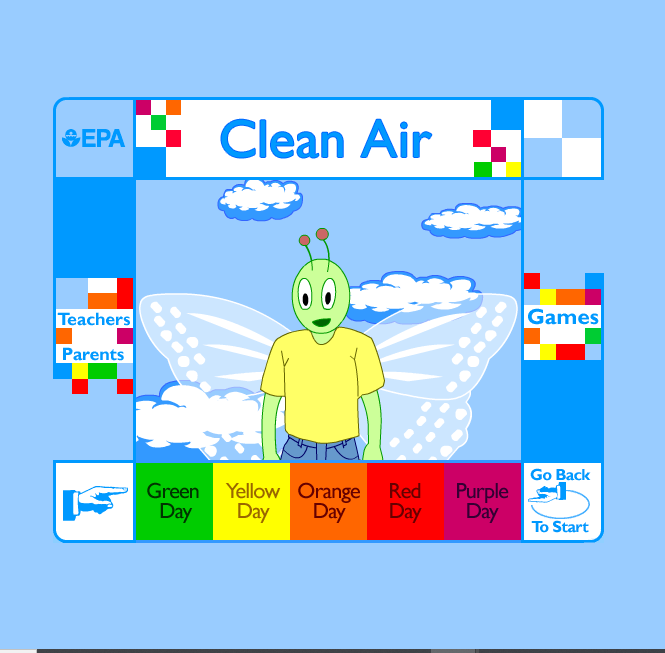
Choose one of three games for ages 4 to 7 to teach them about air pollution and what the various colors mean—green day, red day, etc.

National Institute of Environmental Health Sciences

There are many, many games on the Kids Environment Kids Health page from the National Institute of Environmental Health Sciences.  These games are for kids in 1st to 4th grade.  The free online games to teach kids about the environment include:

Climates of the World

Kids match children in a variety of clothes with the climate and country that they live in.

Matching Game

In one of the matching games, kids can match bird songs with the birds that make them.

Do check this site out as there is so much here young kids would like include many different games, jokes, riddles, and songs.

Energy Star

Calling all Dr. Seuss fans!  The Energy Star website has a fun game called Join the Lorax.  Games include coloring the Lorax characters, completing a word search, and a picture search for energy efficient items.

Games for Ages 8 to 12

SciJinks

Free Online Games to Teach Kids about the Environment

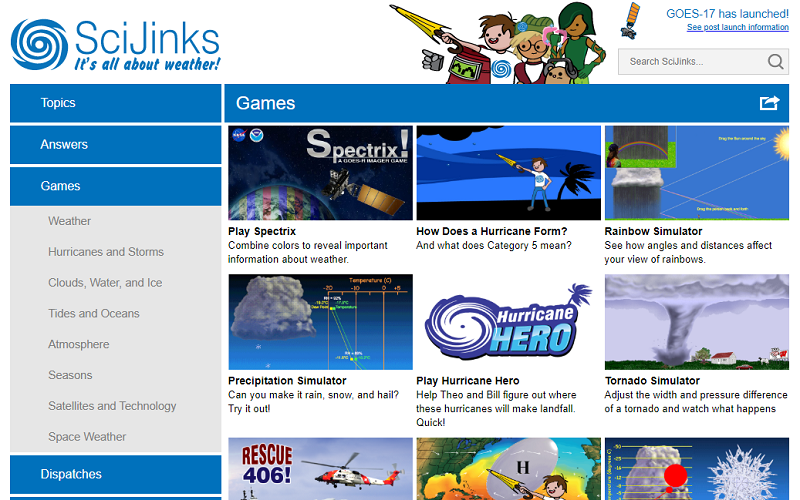
The SciJinks site has many different games for kids from grades 3 to 7.  This site has 23 games including a hurricane simulator and a tornado simulator (kids will probably enjoy seeing the flying cow spinning around when the tornado hits).  Game topics include:

  • Weather,
  • Hurricanes and Storms,
  • Clouds, Water, and Ice,
  • Tides and Oceans,
  • Atmosphere,
  • Seasons,
  • Satellites and Technology,
  • Space Weather

EPA

For those who prefer more scholarly free games to teach kids about the environment, the EPA has an ozone science crossword puzzle.  This puzzle would be perfect for 5th to 7th graders.  There are 17 clues and 17 answers to choose from.

Energy Kids

The U.S. Energy Information Administration has all sorts of activities for kids on the part of their website called Energy Kids.

They have fun energy-related riddles such as, “How do energy-conscious people feel about wind power?  Answer—they’re blown away.”  When my son was in 3rd grade, he would have loved riddles like this.

They also have energy slang terms as well as puzzles (Sudoko, slider puzzles, crosswords and word searches).

For students who love participating in science fairs, the site has science fair experiment ideas for all ages, K-12.

Lastly, the site has suggestions for energy-based field trips as well as a brief description of each site.

NASA Science

For your kids in grades 6-9, Nasa Science has a game to teach your kids about energy flow called Go with the Flow.  Kids get to experiment with how salt and heat affect the weather and the water currents.

If your child is interested in learning about space weather, there is also a game for that on the site called Shields Up!

Smithsonian Science Education Center

If you want to teach your kids about the environment, the Smithsonian Science Education Center site has games for kids in grades 3 to 6.

In the game Habitats, children are given a picture of a habitat (habitats range from desert, coral reef, jungle and marsh.)  They then can choose from images of three animals to decide what animal belongs in that particular habitat.

Similarly, they also have a game, Home on the Range, that corresponds with 2nd grade learning standards.  Kids try to find animals and plants that exist in certain habitats around the United States.  If they don’t know the answer, they can click on each animal or plant that is a possible answer and read more about that particular one.

Smokey for Kids

Teach your kids about the dangers of wild fires with the Smokey for Kids site.  Not only do kids learn how to prevent wildfires, but they also can play games to reinforce what they learn.  Kids might find it especially fun to play the Storymaker Game.  They first fill out quite a bit of information personalized to them, and then a story is created using that information.

Water Sense

In the Water Sense game, created by the EPA, lead the water drop through a maze, being careful to avoid water wasters.  This game is great for late elementary and early middle school students.

Smithsonian’s National Zoo & Conservation Biology Institute

In the Migration Game, students answer questions about migration.  Each question that they answer correctly gets Wanda the Wood Thrush closer to her summer home in Maryland from her winter home in Costa Rica.

Sample multiple choice questions include, “When do Wood Thrushes fly when they are migrating?” and “How long does it take a Wood Thrush to migrate from Costa Rica to Maryland?”

Recycle City

Another site created by the EPA, Recycle City offers two activities for kids.  First, there is the Recycle City Challenge, where kids can answer questions about actions people can take to reduce waste and energy use.  They can earn points and jump on the leader board.

They can also play the Dumptown Game.  The player is in charge of Dumptown and must start programs to reduce waste and encourage recycling.  Players will be able to see the financial differences based on the programs they implement.

Final Thoughts

Most kids love playing games, all the better if they’re electronic games.  Why not use these free online games to teach kids about the environment to both entertain and educate your children?  I’m guessing your kids, if they’re like mine, would be happy to try out these games and learn new jokes and riddles to add to their repertoire.

Melissa Batai
Melissa Batai

Melissa is a writer and virtual assistant. She earned her Master’s from Southern Illinois University, and her Bachelor’s in English from the University of Michigan. When she’s not working, you can find her homeschooling her kids, reading a good book, or cooking. She resides in Arizona where she dislikes the summer heat but loves the natural beauty of the area.

Filed Under: Education, Green Living, Parenting Blog at KidsAintCheap, Stuff to Do Tagged With: educational games, environmentally friendly, Learning

Encouraging Good Language Development for Toddlers

September 9, 2015 | Leave a Comment

Is your child having a hard time learning to talk? Here's how to encourage good language development for toddlers.Since my daughter is the only child I’ve ever really been around for any length of time, I really have nothing else to compare to in terms of development. People often comment though on my two-year-old’s language development. Other parents, teachers and people who have way more experience with kids than I do. Recently a friend of mine asked if I did anything ‘’special’’ to teach our daughter how to speak ‘’so well’’.

Given that this is my first go-round with this parenting thing, my answer is always no, but when I think about it my daughter’s day-to-day life is surrounded by opportunity communicate, effectively.

Starts with communication at home

My husband and I avoided ‘’baby talk’’ from the very beginning. We didn’t have silly names for things, ever. If we were giving her a glass of water or a bottle we wouldn’t call it ‘’wa wa’’ or ‘’ba ba’’ instead. Traditional ‘’baby talk’’ has always seemed unnatural to me, so this wasn’t exactly something I deliberately didn’t do but after being around friends with other young children I realised how different my day-to-day language was with our daughter, it was more ‘’grown up’’ somehow.

Though I don’t think it’s necessarily a bad thing if you want to communicate in easier tones for your child to understand, I do think expecting them to suddenly stop using these words at a certain age is then unfair.

Read to your child, look at pictures

I can’t stress this enough. You can never read too much to your kid, it’s just that simple. We read all sorts of different books to encourage the diversity. Everything from simple picture books that are fun to longer books, that, I think, encourages focus. It’s the simple picture books (with busy pages) that we have the most fun with though. When she’s really young they’re fun pictures where we can point out all the different things on the page and as gets older I can ask everything from ‘’count the balloons’’ to ‘’who is closer to the boat?’’ to ‘’where’s the octagon?’’ type of questions. We also like flash cards.

Have basic expectations

If our daughter mispronounces something, we correct her. Not in a military drill type of way but we will usually say ‘’I think you mean this’’, just once. After a few times (or correcting her) she’s usually got the proper pronunciation down.

Be selective with screen time

We do allow our daughter to watch a little TV and movies but we’re very selective about what she watches. We follow her lead as to if she’s into a show or not but if we as parents don’t like it we won’t allow it. There are a lot of really dumb programs for children. Ones that speak in dumb languages and words. The first red flag for us as parents is the clarity of speech.

Play Games With Your Surroundings

Something I started doing with her when she was young was count the stairs as we walked up. We also sing songs like ABC’s when we’re driving in the car to keep her distracted from an otherwise boring car ride. From these things alone she has been counting and singing her ABC’s for many months now.

I am by no means and expert of any kind, these are just a few things that we’ve done that seem to have led to a pretty decent vocabulary and pronunciation for our two-year-old.

Do you have any tips for encouraging good language development for toddlers?

Catherine
Catherine

Catherine is a first time momma to a rambunctious toddler. When she isn’t soaking up all that motherhood has to offer, you can find her blogging over at Plunged in Debt where she chronicles her and her husbands journey out of debt. You can also follow her on Twitter.

plungedindebt.com

Filed Under: Education Tagged With: babies, language development, Learning, toddlers

Joking is an Inexpensive Teaching Tool

November 30, 2011 | Leave a Comment

Use joking and pretending for a happy and well-adjusted childI am not known to be a big joker.  In fact, it is a big joke to a lot of very close friends how serious a person I am.  So imagine my apprehension when I discovered that joking around and pretending with your kids is supposedly a good thing for their development.  So, before I started to panic in a major way and blame myself for the millions of moments I missed out adding to their better development by not being a joker, I decided to look into this and see what I missed out on doing, if I missed anything at all even.

The importance of joking and pretending

Turns out child development experts have been doing research into the effect of joking and pretending done by parents with their toddler children.  These researchers found

…that joking and pretending by parents with their toddlers were important in building children’s social skills, learning and creativity.

Wow!  I was beginning to feel really inadequate.  Apparently, I missed out on doing something completely free that was supposed to give them this kick start in life skills!  The target age was 15-24 months and my kids have long passed that mark so did that mean it was too late to start this method of development?

Luckily, upon deeper reflection, it turns out that I am not the humorless rock I have always believed myself to be after all.  Research says that making jokes and pretending when doing things helps kids recognize these concepts, the difference between the concepts, and helps them become more creative, have more humor, promotes sociability, and thinking out of the box.

How to joke with young children

And it isn’t really too hard.  I remember there were so many instances where I was cleaning out a closet or a bag or a box of toys with my two kids and then I would ask them where things would go and they would tell me one place and I would “mistakenly” put it elsewhere.  They would laugh and call me out, and I would gasp with appropriate surprise, and this would send them into fits of giggles over how silly mommy was being.  Other things I would do would be to sing their favorite songs and change up the lyrics, all the time innocently looking at them as if I was singing the correct thing. This again would send them into gales of laughter.  These are just a few of the things I recall doing, so I am not too panicked that I have deprived them of jokes and pretend play since birth and at present.

Have I noticed anything extraordinarily different in the development of my kids? Well, honestly, the non-biased answer is not really.  They seem to me the way normal, adjusted, developing, intelligent, happy kids should be.  I will say that my son loves to make stories up in drawing and sings while explaining his drawings, and my daughter really loves mixing things up as a joke.  Is that normal? I am guessing so. Is it great to see them love to laugh and to know that they get some of that from their staid and serious mom?  It sure is.

What do you think about humor as a teaching tool?

Brian
Brian

Brian is the founder of Kids Ain’t Cheap and is now sharing his journey through parenthood.

 
Email • Google + • Facebook • Twitter

Filed Under: Parenting Tagged With: Child Social Skills, Creativitiy, Joking, Learning, Play, Pretend

  • Facebook
  • Pinterest
  • RSS
  • Twitter

Basic Principles Of Good Parenting

Here some basic principles for good parenting:

  1. What You Do Matters: Your kids are watching you. So, be purposeful about what you want to accomplish.
  2. You Can’t be Too Loving: Don’t replace love with material possessions, lowered expectations or leniency.
  3. Be Involved Your Kids Life: Arrange your priorities to focus on what your kid’s needs. Be there mentally and physically.
  4. Adapt Your Parenting: Children grow quickly, so keep pace with your child’s development.
  5. Establish and Set Rules: The rules you set for children will establish the rules they set for themselves later.  Avoid harsh discipline and be consistent.
  6. Explain Your Decisions: What is obvious to you may not be evident to your child. They don’t have the experience you do.
  7. Be Respectful To Your Child: How you treat your child is how they will treat others.  Be polite, respectful and make an effort to pay attention.
Best Parenting Blogs

Most Popular

Baby

10 Baby Names That Were Once Considered “Grandparent Names” but Feel Cool Again

Evan Morgan
Baby

9 Baby Names Inspired by Fall Without Naming Your Child Autumn

Evan Morgan
Baby

10 Vintage Baby Names That Sound Surprisingly Modern Again

Evan Morgan
Baby names

Teachers Admit: These 6 Baby Names Create Instant Bias in the Classroom

Latrice Perez
6 Baby Names That Sound Cute Now but Cause Problems Later

6 Baby Names That Sound Cute Now but Cause Problems Later

Brandon Marcus

All content on Kids Ain’t Cheap is for entertainment purposes only. By reading this blog, you agree that Kids Ain’t Cheap is not responsible for any actions taken after reading this blog. For the full disclaimer, see our privacy policy.

Please note that Kids Ain’t Cheap has financial relationships with some of the merchants mentioned here. Kids Ain’t Cheap is funded by banner advertising, commission sales and search optimization consulting.

Copyright © 2006–2026 | District Media | All Rights Reserved | Privacy Policy

Copyright © 2026 Runway Pro Theme by Viva la Violette