
• Home
  • About Us
  • Toolkit
  • Archives
  • Advertise
  • Privacy Policy

Kids Ain't Cheap

But They Sure Are Worth It

  • Parenting
    • Baby Stuff
    • Books and Reading
      • Aesops Fables
      • Comic Books
    • Education
    • Family Time
    • Green Living
    • Growing Up
    • Healthy Living & Eating
    • Holidays
    • Parenting
    • Random Musings
    • Shopping
    • Stuff to Do
  • Money
  • Product Reviews
    • Books and Magazines
    • Discount Sites
    • Furniture
    • House Keeping
    • Reviews News
    • Toys and Games
  • Contact Us
  • Our Editorial Commitment
  • Search

The Grandparent Spending Problem: What to Do When They Keep Buying Your Kids Everything

August 23, 2026 | Leave a Comment

Grandparent With Grandkids
Grandparents love showing affection through gifts, but excessive spending can leave parents managing clutter, conflicting expectations, and difficult family conversations. Clear boundaries can keep generosity focused on what children value most: meaningful relationships and time together. (Pexels).

Grandparents often show love through generosity, but there is a point when another toy, outfit, gadget, or surprise stops feeling helpful. For parents, too much grandparent spending can create clutter, undermine household rules, and teach children to expect a purchase every time Grandma or Grandpa visits. This is hardly a small phenomenon: AARP’s 2026 research found that 90% of grandparents provide financial support to grandchildren, spending an average of $2,654 annually across their grandkids. Collectively, grandparents provide an estimated $172 billion in direct financial assistance every year, on top of hundreds of billions of dollars’ worth of unpaid care. The goal is not to discourage that generosity but to make sure it strengthens the family instead of becoming a source of conflict.

First, Decide Whether You Actually Have a Spending Problem

A grandmother who occasionally arrives with a coloring book is different from a grandparent who buys expensive electronics after a parent has specifically said no. Before starting a potentially uncomfortable conversation, identify what is actually bothering you about the spending. Is your house overflowing with toys, are grandparents disregarding your rules, are siblings receiving noticeably different gifts, or is your child beginning to associate visits with getting something? The distinction matters because a little harmless grandparent spoiling may not require the same response as repeated purchases that interfere with parenting decisions. Establishing exactly which behavior needs to change makes it much easier to communicate a reasonable boundary.

Explain the Problem Without Criticizing Their Generosity

Starting with “You buy them too much stuff” can immediately put grandparents on the defensive, so focus instead on what is happening in your household. You might explain that toys are overflowing from the playroom, your child has started asking grandparents for purchases, or expensive gifts are conflicting with lessons you are teaching about money. ZERO TO THREE found that disagreements between parents and grandparents frequently stem from mismatched expectations and recommends discussing boundaries and caregiving approaches openly. Research from the C.S. Mott Children’s Hospital National Poll has similarly found that disagreements with grandparents are common, with 43% of parents reporting at least minor disagreements over parenting choices. A simple “We love how generous you are, but we need your help keeping gifts manageable” acknowledges the good intention while making clear that parents still set the household rules.

Create a Gift Rule Everyone Can Actually Understand

“Please don’t buy so much” is difficult to follow because Grandma’s definition of “too much” may be completely different from yours. Instead, establish a rule that removes the guesswork: one birthday gift and one experience, a $50 limit for ordinary visits, no gifts outside birthdays and holidays, or approval from a parent before any purchase over a certain amount. Parents could also create a shared wish list containing toys, books, clothing sizes, activities, and other things the children genuinely need or want. Using approximately the same rules with both sides of the family can help avoid arguments about one set of grandparents receiving more freedom than another. The objective is not controlling every dollar grandparents spend but giving their generosity some guardrails.

Separate “Spoiling” From Undermining a Parent’s Decision

This distinction deserves particular attention because not every unwanted gift is equally serious. If Grandpa slips your daughter an extra cookie, you may decide that is part of the fun of having grandparents; if he buys her a smartphone after you explicitly said she was not ready for one, that is a parenting-boundary issue rather than merely excessive spending. ZERO TO THREE recommends identifying which family rules are essentially “carved in stone” and which ones have room for flexibility when grandparents are involved. Parents can apply the same principle to money by deciding beforehand which purchases are harmless indulgences and which require permission. That gives grandparents some freedom to enjoy their role without allowing expensive gifts to override decisions that belong to Mom and Dad.

Give Grandparents Better Ways to Spend

Simply saying “stop buying things” removes an activity grandparents may genuinely enjoy, so give them alternatives. Suggest zoo trips, baking afternoons, movie outings, museum memberships, books, craft projects, camps, sports fees, or contributions toward activities the child already enjoys. The latest AARP research shows grandparents already provide financial assistance far beyond toys, including clothing, food, school supplies, childcare, camps, travel, and even medical expenses. Grandparents interested in larger financial gifts could also talk with parents about education savings or other long-term goals rather than surprising a child with another expensive gadget. Redirecting generosity lets grandparents continue experiencing the pleasure of giving while parents have more control over what enters the house.

Try the “Something, Somewhere, Someday” Rule

Families overwhelmed by gifts can divide grandparent generosity into three simple categories: something to have, somewhere to go, or something for someday. “Something” might be one birthday toy or outfit, “somewhere” could be tickets to the aquarium or a grandparent-grandchild outing, and “someday” could mean money toward education or another future goal. Grandparents still have several ways to give, but every visit no longer produces another bag of toys for the parents to store. Older children can even participate by choosing whether they would prefer an item, an experience, or money saved toward a larger goal. That turns grandparent generosity into an opportunity to teach children that money can buy more than immediate possessions.

What If Grandma Keeps Ignoring the Rule?

This is the missing section I’d definitely add because setting a boundary does not guarantee someone will follow it. If a grandparent repeatedly ignores an agreed gift limit, parents can calmly establish what happens to unapproved purchases before the next one appears. An excessive toy might stay at Grandma’s house, be returned, be saved for the child’s birthday, or require the child to choose an existing toy to donate before keeping it. The consequence should not be designed to punish the grandparent or embarrass the child; it should simply prevent ignoring the rule from making the rule meaningless. Research on parent-grandparent disagreements has found that unresolved differences can affect family relationships, making consistent communication preferable to allowing resentment to accumulate.

Protect the Grandparents’ Finances Too

Sometimes the biggest concern is not what children are receiving but whether grandparents can actually afford to keep giving it. AARP reported on a 2025 survey in which 17% of grandparents said they felt pressured to contribute more than they could afford, while 11% said they had withdrawn money from savings or retirement accounts to help their grandchildren. Parents who notice expensive gifts arriving despite a grandparent’s tight budget should consider saying explicitly that nobody expects them to compete with the other grandparents or finance experiences they cannot comfortably afford. Grandparents approaching or already living in retirement have their own housing, healthcare, emergency, and long-term-care expenses to consider. No gaming system, vacation, or birthday extravagance is worth compromising Grandma or Grandpa’s future financial security.

Make Memories the Thing Grandkids Expect

The long-term goal is not for grandchildren to think, “Grandma doesn’t buy me things anymore.” It is for them to think, “When Grandma comes over, we do something together.” Create traditions that have little connection to money: Saturday pancakes, planting a garden every spring, baking birthday cakes together, library trips, movie nights, fishing, crafts, or an annual sleepover. AARP’s 2026 study found that 79% of grandparents described the grandparent experience as extremely or very fulfilling, while grandparents who provide care average more than 500 hours annually with their grandchildren. Those numbers are a useful reminder that the grandparent-grandchild relationship is already enormously valuable before anyone walks into a store.

Generosity Works Better When Everyone Knows the Rules

Grandparents should be allowed to enjoy spoiling their grandchildren a little, and parents do not need to police every ice cream cone or surprise book. The problem begins when spending undermines parenting decisions, creates expectations in children, overwhelms the household, causes family resentment, or threatens a grandparent’s own finances. Clear rules, approved wish lists, experience gifts, future-oriented giving, and predictable consequences for major boundary violations can preserve generosity without allowing purchases to control the relationship. Most importantly, children can learn that Grandma and Grandpa’s value comes from the relationship they share, not from what appears in their shopping bags.

Have grandparents ever bought your children more than you were comfortable with, and how did you handle it without damaging the relationship?

What to Read Next

8 Things Grandparents Buy Kids That Parents Secretly Wish They Wouldn’t

6 Budgeting Hacks from Depression Era Grandmothers

8 Reasons Your Kids Prefer Staying with Grandma—And It’s Not Just the Snacks

Evan Morgan

Evan Morgan has been a full-time freelance writer and editor for 10+ years. When not working, he enjoys catching the latest true crime documentary or getting lost in a good book.
Filed Under: Parenting Tagged With: family finances, family relationships, gift giving, grandchildren, grandparent spending, grandparents, money, Parenting, parenting boundaries, Raising Children

Teachers Support It: Why Parents Are Boycotting Class Gift Funds in 2026

February 21, 2026 | Leave a Comment

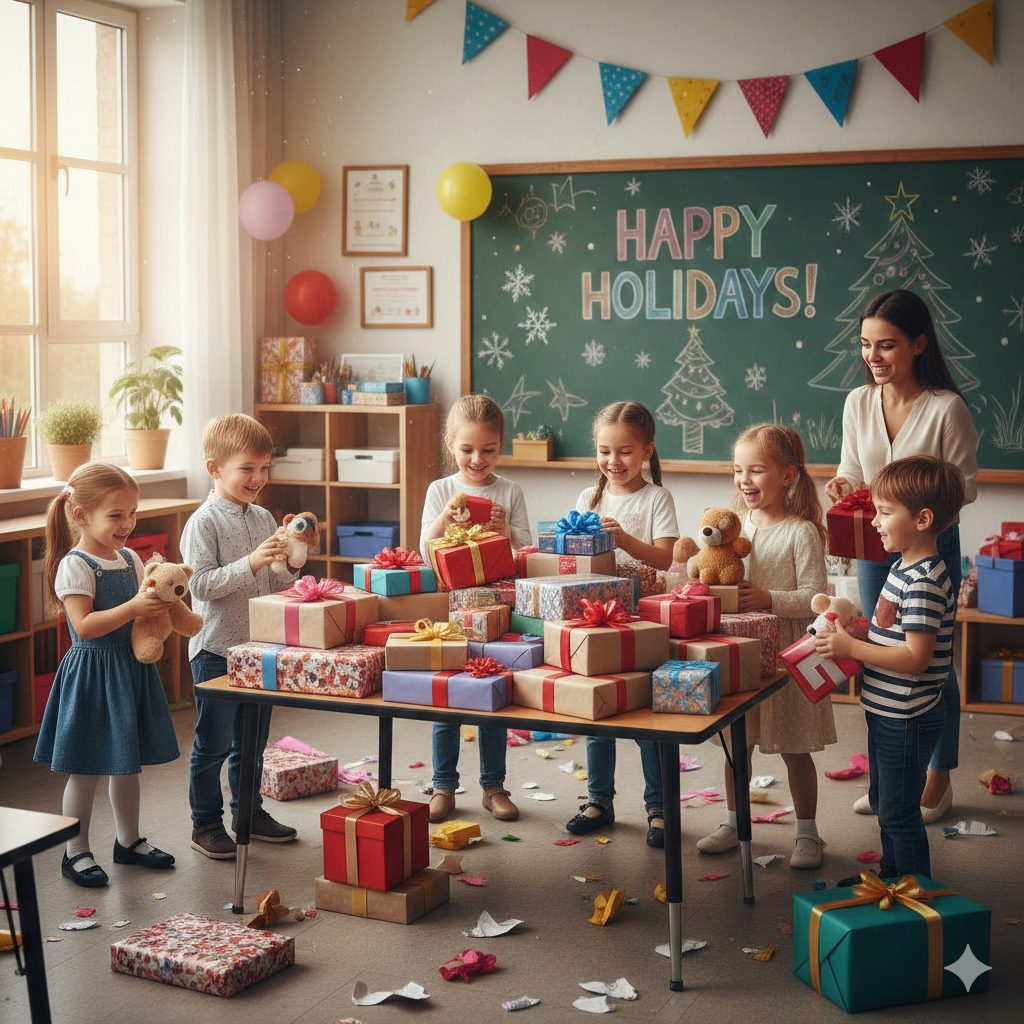
Class Gift Funds
Image source: Gemini

The email arrives like clockwork every holiday: a “suggested” donation for the class gift fund. You want to show your appreciation, but the constant pressure to contribute is starting to feel like a second mortgage. More parents are currently speaking up about the pressure of these organized collections and choosing to opt out. Honestly, the system of gift-giving has become a performative burden that often creates more stress than joy. Here is the reveal of why the shift toward simple, intentional giving is gaining momentum and what teachers actually want from you instead.

The Performative Pressure of Class Funds

Class gift funds were originally meant to simplify things, but they have evolved into a source of social anxiety. Parents often report feeling judged if they cannot meet a suggested donation of twenty or fifty dollars. This hidden system can create a divide in the classroom based on who can afford to pay for the group’s generosity. Furthermore, many teachers say that large group gifts sometimes result in expensive items they do not actually need or want. It is a cycle of spending that prioritizes the “look” of appreciation over the actual utility of the gift. Consequently, the fund becomes a chore rather than a sincere gesture of thanks.

What Teachers Really Need for Survival

If you want to truly help a teacher, the answer is rarely a branded mug or a high-end candle. Educators often spend hundreds of their own dollars every year just to keep their rooms functional with basic supplies. Surprisingly, a simple gift card to a major retailer or a box of quality supplies like tissues and pens is worth far more than a luxury gift basket. On the other hand, surveys consistently show that the most valued gift is a heartfelt, handwritten note from the student. These personal connections are the fuel that keeps teachers going, yet they cost nothing to produce.

Reimagining Appreciation Without the Invoice

Choosing to move away from a group fund is not about being stingy; it is about being intentional. By stepping away from the mandatory donation, you reclaim your right to show gratitude in a way that fits your budget. You might choose to volunteer your time or provide a specific item the teacher has mentioned needing for a project. This shifts the focus from a financial transaction back to a human relationship. Teachers often appreciate the honesty of a parent who chooses a simple, personal gesture over a forced contribution. This transparency breaks the system of social pressure and builds a stronger school community for everyone involved.

Protecting Your Budget and Your Relationships

Your value as a parent is not measured by the size of your contribution to a gift pool. By simplifying classroom giving, you protect your wallet and set a healthy example for your children regarding the true meaning of gratitude. You deserve to show appreciation without the guilt of an unmanageable price tag. Take the lead in your school and suggest more practical, low-cost ways to celebrate the hard work of our educators. When the pressure is removed, the gratitude becomes much more sincere. You have the power to change the culture of your classroom starting today.

Are you feeling the pressure of class gift funds this year? Leave a comment below and share how you prefer to show appreciation for your child’s teacher.

What to Read Next…

  • California High Schools Expand Ethnic Studies Graduation Requirements in 2026
  • 7 Things Teachers Wish Parents Would Stop Buying for School Parties
  • 5 Ways Schools Are Secretly Shifting Costs to Parents in 2026
Latrice Perez

Latrice is a dedicated professional with a rich background in social work, complemented by an Associate Degree in the field. Her journey has been uniquely shaped by the rewarding experience of being a stay-at-home mom to her two children, aged 13 and 5. This role has not only been a testament to her commitment to family but has also provided her with invaluable life lessons and insights.  As a mother, Latrice has embraced the opportunity to educate her children on essential life skills, with a special focus on financial literacy.

Filed Under: Money and Finances Tagged With: Class Gifts, education trends, Financial Pressure, gift giving, Parenting, school budgets, Teacher Appreciation

Some Last Minute Gifts Before the New Year

December 31, 2010 | Leave a Comment

Last minute gift ideas
Image from Christmasstockimages.com

If you are anything like me, you will surely have forgotten one or two close friends over the holidays.  Or you might have forgotten that you promised to bring something to the New Year’s potluck celebration at your brother’s house.  If this is so, then here are some ideas that I’ve used this year and over the past few years, when this happens to me.

Last Minute Gift Ideas:

First you have to look at the recipient of this gift.  Is this person a close friend, a recently-made friend, or a colleague?  This matters as this will dictate the theme of the gift you will be giving.

If this is for a close friend- this is the easiest person to give a gift to. The best last minute gift is something they can use, something that is still unique, and something that is easy to make or find.  I’ve discovered that men and women alike really appreciate something for the home.  Here is a short list of home gifts:

  1. A really nice, big serving dish- good for parties and the like
  2. A charming oil burner- wonderful for the room or the living room
  3. A basket with potpourri- a rustic air freshener
  4. A set of organic soap

If your friend is a colleague- this is the person that is not so easy to gift because there is that professional barrier that can hold you back.  Here are some presents that my colleagues liked.

  1. A compact desktop- to hold pens, clips, pins, post its and the like
  2. A personalized pen- this is great to have when signing those checks, papers, contracts. It’s very professional-looking
  3. A bottle of good wine in a beautiful pouch- after the wine is consumed, the bottle and the pouch can be reused
  4. A stylish and compact laptop bag- this is a must have for the workers of this day and, thankfully, you can find really nice ones for a bargain price.

What are some of your gift ideas?  I’ll bet I can use these next year.

Now, if you forgot that you committed a dish to this year’s potluck, try something sweet and simple like a Leche Flan.  This is milk custard in English, and before you knock it, try it first.  It is delicious, sweet, and very easy to make.

You will need:

  • a double boiler
  • aluminum foil
  • a dozen eggs
  • a can of evaporated milk
  • a teaspoon of lemon essence
  • a cup of sugar, brown or white
  • a cup of water
  • a Llanera (flan mould)- one big one or a few smaller ones

How to Make This Dish:

  1. In a saucepan, mix the sugar and the water in equal amounts over medium heat.  You have to use medium heat or you will burn the syrup. Mix this until it gets drippy, not thick.
  2. Transfer equal amounts of this syrup to the Llanera(s) and leave it to sit for a while to cool.
  3. Separate the yolks from the whites. You need only the yolks.
  4. In a mixing bowl, combine the yolks and evaporated milk slowly, mixing in the lemon essence at the end.  It should be light yellow and liquid at the end.
  5. Pour this mixture into the Llaneras in equal amounts.
  6. Cover the Llaneras with the foil and steam in the dopuble boiler for an hour or until cooked. You will know this is cooked when a knife comes out clean after insertion. make sure this is a smooth and not a serrated knife.
  7. Run a smooth knife along the edges of the pan and then turn over slowly into your serving dish.

Viola!  You have Leche Flan. Trust me, this is a simple and delicious dish that everyone will surely love. Let me know if you’ve tried this and how you liked it.

What are your favorite last minute gift ideas?

Brian
Brian

Brian is the founder of Kids Ain’t Cheap and is now sharing his journey through parenthood.

 
Email • Google + • Facebook • Twitter

Filed Under: Holidays, Shopping Tagged With: gift giving, last minute gifts, Leche flan, New Years, Recipe

The Magic and Meaning of Christmas

December 22, 2010 | Leave a Comment

The spirit of Christmas
Image on DeviantArt

I can still remember the anticipation I felt – as a child – waiting for Santa. My brother would usually wake up first – several times actually; 10pm, 12am, 2am, then finally at 5am — I would get up with him. I don’t think that kid even slept a wink; he was just so excited.

We had to wait until 6am to wake our Mom up though. It seemed like that hour took forever. Thank goodness our stockings were always right outside our bedroom doors, so we would go through those while we waited.

When I think back to some of my favorite Christmases; I can still feel the butterflies of excitement, the thrill of discovering I had received my most wished for gift and how happy I was to read the letter that Santa had left for me – ME!

Even though I can still tap into those feelings and the excitement of that time – part of me – wasn’t sure I really wanted to do the whole Santa thing with the boys. I really never expressed this to anyone (they would surely think I had lost my mind), and it’s hard to explain how someone – who loves everything about Christmas – could even consider, not allowing her children the same magical experience that she had, growing up.

Of course, Santa does visit our house, and this year the boys are over the moon with excitement. It’s amazing to see how everything is really clicking for them this year but — it again got me thinking, “Is Santa really a good thing to do? Does it take away from the true meaning of Christmas? Is it confusing them?  How can I tell them lying is wrong, when here I am doing it?”

It’s been hard for me to really explain how we go from; “Santa visits you and brings you toys” to “We are celebrating Jesus’ birthday.” If it’s hard for me to figure out how to explain it, you can imagine how hard it would be for a preschool age child to understand it. Clearly — I needed to learn more.

The story of the first Santa

So, I decided to go in search of the first Santa – St. Nicholas.

I was very happy to discover a web site devoted to St. Nicholas. The St. Nicolas Center was able to really connect the dots for me. It showed me how I could incorporate Santa (which represents the spirit of giving) without feeling like I was taking away from the true meaning of Christmas; which if course is to celebrate God’s greatest gift — the birth of Jesus Christ.

To gain a better appreciation – and more understanding – of this wonderful man; I encourage you to visit the site yourself. There is a lot of great information to be gleaned from this web site and many activities geared toward children as well.

I can now explain to the boys that St. Nicholas was a man who loved Jesus very, very much! He loved Jesus so much that he decided to follow His teachings, and rid himself of all his worldly possessions. St. Nick was a kind and generous man who lived to make people happy, to protect children, and to provide for those in need.

St. Nicholas represents the spirit of giving — and there is the magic. When we give gifts out of love instead of obligation — that is when we can be joyful and experience the thrill and delight that the season brings.

Connecting Jesus to gift giving

Jesus is the meaning and the true reason for the Christmas season.

Deuteronomy 16:17
Every man shall give as he is able, according to the blessing of the LORD your God which He has given you.

Teaching children to give and give with love, is link that connects Santa and our Savior.

What does Christmas mean to you?

Brian
Brian

Brian is the founder of Kids Ain’t Cheap and is now sharing his journey through parenthood.

 
Email • Google + • Facebook • Twitter

Filed Under: Holidays Tagged With: Christmas, gift giving, Religion, Santa Claus, St. Nicholas

Affording Children’s Gifts and Toys

November 6, 2010 | Leave a Comment

Toys can be expensive if you don't shop smartFor us parents who take our children into any type of store that have toys we know just how expensive toys can be. I remember one time while out with my family I had to buy a birthday gift for a neighbor who was a little girl.

A family outing to the toy store

Having only one girl of my own who was older, I hadn’t shopped for “little girl” toys in a while. I decided I would look at the dolls. Now mind you, they have dolls now that can do more than I can get my boys here to do. They speak when they want something. And I mean speak! Not mumble and incoherently speak and point while pointing in a direction while watching a video game!

Okay, now that was a nice surprise seeing all of these dolls that can actually probably function to help me clean the house but I was in sticker shock! I needed to get a second job just to afford to buy this child a doll (albeit top of the line doll).

Is it more expensive buying for girls than boys? I take my boys and its “Hey Ma, can I get this bag-o-worms?” “Hey Ma, can I get this huge ball that only costs $5.00 pleeeeeeeze?” All the while I am convinced they just want to buy to the ball to test my theory of not throwing large objects around the house while “ma’s” back is turned. I have never heard them ask for a doll that could actually help me out around the house that costs over $50.00 though.

How to save money on toys

How do we parents do it? I mean how do we do it without working three jobs to afford one holiday? I have learned a huge lesson when buying toys.

BUY THEM ON SALE.

When I came back from my sticker-shocking family outing I made a list of all the children I buy for. Birthdays, holidays and anything else that may come up unannounced. I keep the list in a notebook that I know where it is (unless one of the boys grabs it, then you’ll hear someone calling for a list notebook).

When I am out shopping if I see something that is marked down and at a great savings I now buy it. I was always famous for convincing myself I would make a trip back to buy the item later. Another lesson, I cannot let myself do that.

With the holiday season coming up what are some ways you save when buying gifts and toys?

Brian
Brian

Brian is the founder of Kids Ain’t Cheap and is now sharing his journey through parenthood.

 
Email • Google + • Facebook • Twitter

Filed Under: Money and Finances, Shopping Tagged With: gift giving, Saving Money, Shopping Tips, Toy Store, Toys

  • Facebook
  • Pinterest
  • RSS
  • Twitter

Basic Principles Of Good Parenting

Here some basic principles for good parenting:

  1. What You Do Matters: Your kids are watching you. So, be purposeful about what you want to accomplish.
  2. You Can’t be Too Loving: Don’t replace love with material possessions, lowered expectations or leniency.
  3. Be Involved Your Kids Life: Arrange your priorities to focus on what your kid’s needs. Be there mentally and physically.
  4. Adapt Your Parenting: Children grow quickly, so keep pace with your child’s development.
  5. Establish and Set Rules: The rules you set for children will establish the rules they set for themselves later.  Avoid harsh discipline and be consistent.
  6. Explain Your Decisions: What is obvious to you may not be evident to your child. They don’t have the experience you do.
  7. Be Respectful To Your Child: How you treat your child is how they will treat others.  Be polite, respectful and make an effort to pay attention.
Best Parenting Blogs

Most Popular

Baby

10 Baby Names That Were Once Considered “Grandparent Names” but Feel Cool Again

Evan Morgan
Baby

9 Baby Names Inspired by Fall Without Naming Your Child Autumn

Evan Morgan
Baby

9 Baby Names That Sound Expensive Even Though Naming Your Baby Is Still Free

Evan Morgan
Baby names

Teachers Admit: These 6 Baby Names Create Instant Bias in the Classroom

Latrice Perez
6 Baby Names That Sound Cute Now but Cause Problems Later

6 Baby Names That Sound Cute Now but Cause Problems Later

Brandon Marcus

All content on Kids Ain’t Cheap is for entertainment purposes only. By reading this blog, you agree that Kids Ain’t Cheap is not responsible for any actions taken after reading this blog. For the full disclaimer, see our privacy policy.

Please note that Kids Ain’t Cheap has financial relationships with some of the merchants mentioned here. Kids Ain’t Cheap is funded by banner advertising, commission sales and search optimization consulting.

Copyright © 2006–2026 | District Media | All Rights Reserved | Privacy Policy

Copyright © 2026 Runway Pro Theme by Viva la Violette