• Home
  • About Us
  • Toolkit
  • Archives
  • Advertise
  • Privacy Policy

Kids Ain't Cheap

But They Sure Are Worth It

  • Parenting
    • Baby Stuff
    • Books and Reading
      • Aesops Fables
      • Comic Books
    • Education
    • Family Time
    • Green Living
    • Growing Up
    • Healthy Living & Eating
    • Holidays
    • Parenting
    • Random Musings
    • Shopping
    • Stuff to Do
  • Money
  • Product Reviews
    • Books and Magazines
    • Discount Sites
    • Furniture
    • House Keeping
    • Reviews News
    • Toys and Games
  • Contact Us
  • Our Editorial Commitment
  • Search

8 Must-Have Baby Gadgets That Pediatricians Say Delay Development

February 2, 2026 | Leave a Comment

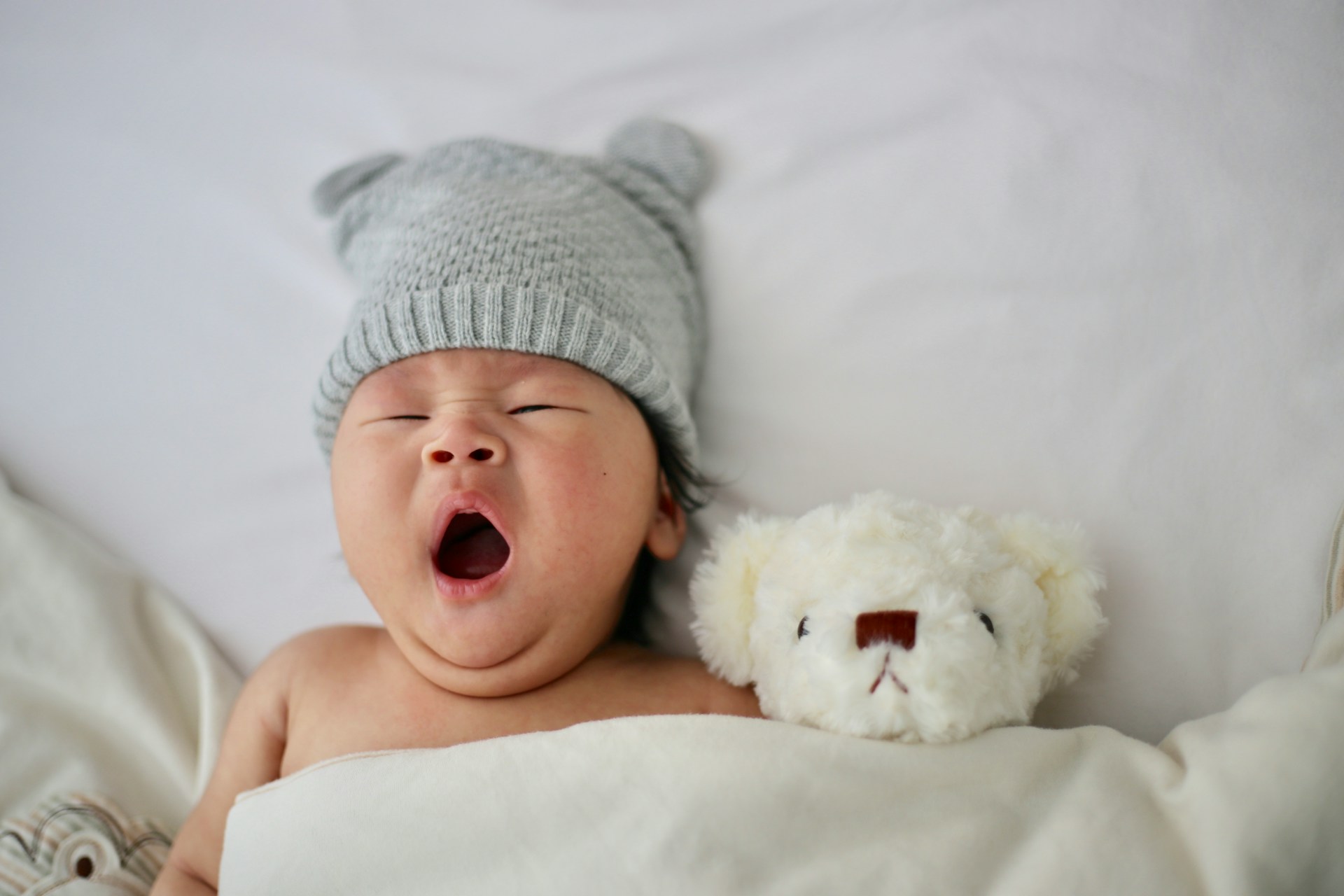
These Are 8 Must-Have Baby Gadgets That Pediatricians Say Delay Development
Image Source: Shutterstock.com

Walk into any baby store or scroll social media for five minutes, and you’ll feel like you’re one gadget away from being the “perfect” parent. Every product promises smarter babies, calmer nights, faster milestones, and easier parenting.

The problem is that not all convenience equals healthy development, and some popular baby gadgets can actually interfere with natural learning and growth. Pediatricians and child development specialists often emphasize that babies develop best through movement, human interaction, and real-world sensory experiences, not constant assistance from devices.

1. Baby Walkers That Create The Illusion Of Early Walking

Baby walkers look like confidence boosters, but pediatricians have warned for years that they can interfere with natural motor development. Babies in walkers learn to move without using the muscles and balance systems needed for real walking. This can delay crawling, pulling up, and independent standing because core strength and coordination develop differently.

Doctors have consistently advised against their use, citing safety risks like falls and injuries. Babies need floor time, not wheeled shortcuts, to build strength and spatial awareness. A simple play mat and supervised tummy time support far healthier physical development than any walker ever could.

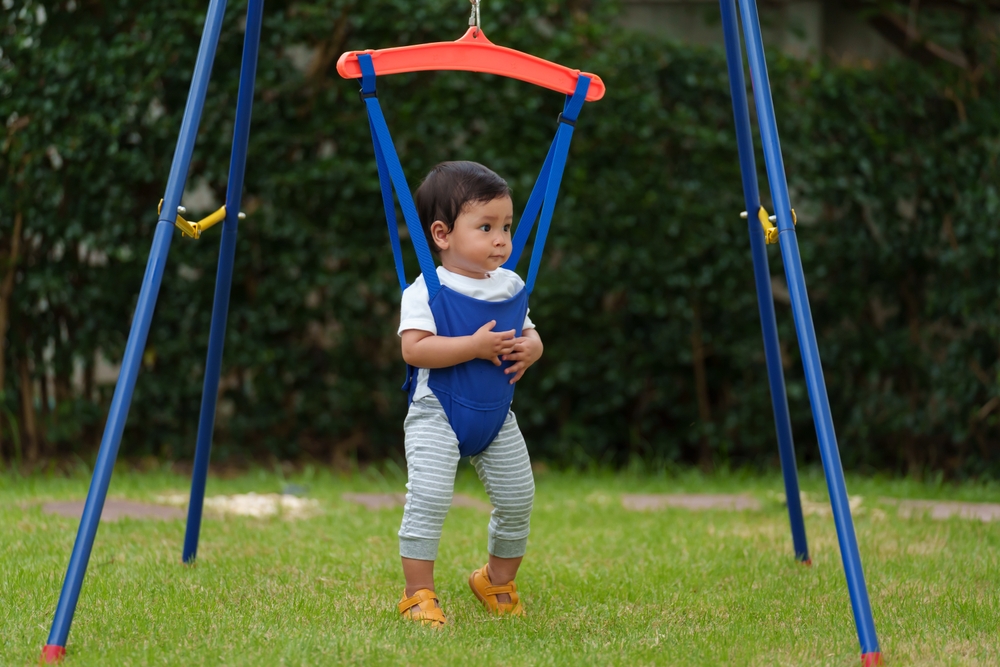
2. Jumpers That Replace Natural Muscle Development

Those doorway jumpers and bouncing activity centers look like harmless fun, but pediatricians often caution against frequent use. Jumpers encourage unnatural movement patterns that don’t match how babies actually learn to walk or balance. They can place stress on hips, spine, and developing joints when used too often or too early. Babies also miss out on crawling, rolling, and floor-based exploration that builds coordination and strength.

Short, supervised use may not cause harm, but relying on jumpers as daily entertainment can delay key motor milestones, according to many doctors. Floor play, crawling space, and climbing-safe environments offer better long-term benefits.

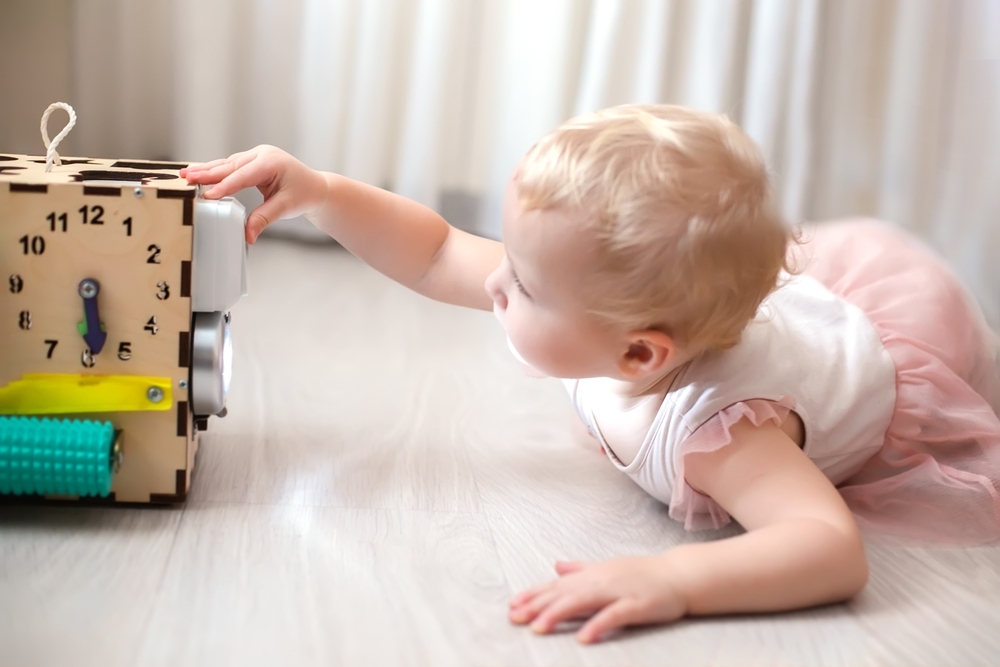
3. Electronic Learning Toys That Replace Human Interaction

Talking toys, light-up tablets, and “educational” screens promise early learning, but pediatricians consistently stress that real learning comes from human interaction. Babies learn language through face-to-face conversation, tone, expression, and response, not recorded voices and flashing buttons. Passive stimulation does not build communication skills the same way real engagement does.
These Are 8 Must-Have Baby Gadgets That Pediatricians Say Delay Development
Image Source: Shutterstock.com

4. Infant Positioning Seats That Limit Movement

Those molded infant seats that prop babies upright look helpful and adorable, but they limit natural movement. Pediatricians often caution that babies need freedom to move, twist, roll, and shift their bodies naturally. Being placed in fixed positions for long periods can slow muscle development and body awareness. Babies learn balance by falling, adjusting, and trying again, not by being held in perfect posture.

These seats may be useful briefly for feeding or supervision, but they should not replace floor time. Open space, soft mats, and safe play areas give babies the movement they need to develop properly.

5. Overused Swings And Motion Devices

Swings and automated rockers can be lifesavers for exhausted parents, but overuse can create developmental tradeoffs. Babies benefit from being soothed by human touch, voice, and movement, not just mechanical motion. Excessive reliance on swings reduces floor time, which is essential for strength, coordination, and exploration.

Pediatricians and experts emphasize balance, not elimination, when it comes to these devices. They work best as short-term soothing tools, not long-term substitutes for interaction. Holding, carrying, and engaging your baby builds emotional security and physical development simultaneously.

6. Baby Containers That Limit Exploration

The term “container baby syndrome” is used by therapists to describe overuse of devices that restrict movement, like bouncers, seats, loungers, and carriers. Babies need freedom to explore their environment to develop motor skills, problem-solving, and body awareness. Too much time in containers limits rolling, crawling, scooting, and reaching behaviors.

Pediatricians emphasize that development happens through movement, not containment. Convenience devices should support parenting, not replace movement. Rotating free play, tummy time, and open-floor exploration makes a real developmental difference.

7. White Noise And Sleep Machines Used Constantly

White noise machines can help babies sleep, but constant use can reduce exposure to natural sounds and voices. Pediatricians note that babies learn language patterns from hearing real speech, not continuous background noise. Overuse can also make babies dependent on artificial sound environments for sleep.

Moderation matters more than elimination here. Use sound machines when needed, but allow quiet, natural sound spaces during waking hours. Real-world sounds help babies build auditory processing and language skills.

8. Over-Structured Activity Centers

Multi-feature activity centers look stimulating, but they often overwhelm babies with lights, sounds, and limited movement options. Babies benefit more from simple toys that encourage exploration, grasping, and movement.

When everything lights up and responds automatically, babies don’t learn cause-and-effect the same way. Open-ended toys like blocks, balls, and soft books promote deeper learning. Simpler environments often produce stronger developmental outcomes.

Real Growth Happens In Real Life, Not Gadgets

The most powerful developmental tools aren’t sold in boxes or marketed online. They look like floor time, eye contact, conversation, messy play, movement, and human connection. Gadgets may offer convenience, but they should never replace interaction, exploration, and freedom of movement.

If you looked around your home right now, which of these gadgets does your baby spend the most time in—and what would change if you replaced just one of them with more real-world play? Give your parenting insights in the comments below.

You May Also Like…

Listening In: 7 Kid Gadgets That Listen to Your Family

9 Traditional Family Routines That Help Kids Feel Secure

Why Pediatricians are Quietly Flagging These 5 Household Items as Toxic

7 Boomer-Era Family Traditions That Lower Household Stress

6 Toy Store Layout Tricks That Manipulate Your Wallet

Brandon Marcus
Brandon Marcus
Brandon Marcus is a writer who has been sharing the written word since a very young age. His interests include sports, history, pop culture, and so much more. When he isn’t writing, he spends his time jogging, drinking coffee, or attempting to read a long book he may never complete.

Filed Under: Baby Stuff Tagged With: baby development, baby gadgets, Baby Gear, baby safety, child development, early learning, infant growth, modern parenting, Parenting, parenting tips, pediatrician advice

What Are the Long-Term Effects of Sleep Training?

April 14, 2025 | Leave a Comment

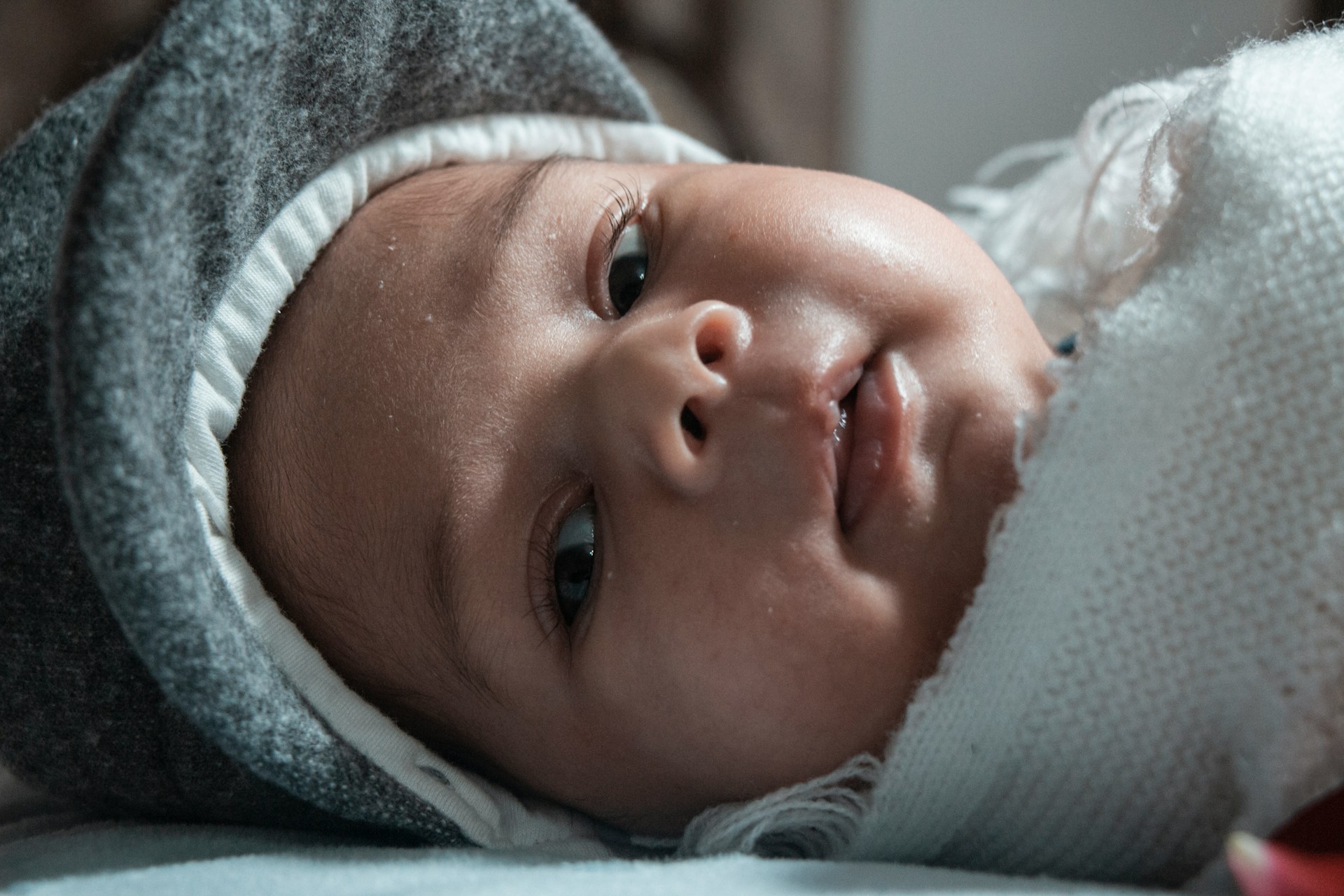
baby crying
Image Source: Unsplash

Sleep training is a sensitive, complex topic. Some parents and experts swear by it and extol the benefits of allowing babies to self-soothe. Others believe that letting babies “cry it out” could create attachment issues and increase infant stress. To help you decide how to handle bedtime, let’s dive into some of the studies that show the long-term effects of sleep training.

What Is Sleep Training?

Before we dive into the studies, it’s important to understand what sleep training is. Sleep training is an umbrella term that encompasses many different types of bedtime routines. These run the gamut from shutting the door and letting babies “cry it out” to sleeping next to their crib. This method is often referred to as “camping out” in the baby’s nursery. Some sleep training methods recommend checking on your child at regular intervals or if they cry for too long.

The fact that there are so many sleep training methods can make it difficult for researchers to compare all of them. It’s possible that the type of sleep training you use may affect your baby’s long-term outcomes.

Effects of Sleep Training

Health of the Parents

One of the most positive long-term effects of sleep training is the health benefits this method confers on parents. Obviously, your baby waking up and crying frequently disturbs your sleep, which has negative consequences over time. Studies have shown that depressed moms are more likely to have babies with broken sleep patterns. In this case, sleep training may be beneficial. According to the BBC, mothers of sleep-trained two-year-olds were less likely to be depressed. Ultimately, when parents have better mental health, they’re able to be more responsive, engaged, and effective.

Long-Term Attachment

baby looking at you
Image Source: Unsplash

Some experts warn that sleep training could create attachment issues and increase infant stress. However, these claims can be hard to verify because it’s difficult to gauge anxiety in infants. One method used is measuring cortisol, which can be tricky because it naturally fluctuates throughout the day. So experts say to take study results with a grain of salt.

With that being said, a small study found that babies had elevated cortisol levels after sleep training interventions. Plus, in 1998, Harvard researchers discovered that babies who were left to cry could be more susceptible to stress and trauma as adults. However, some longitudinal studies yielded different findings.

Researchers in Australia decided to measure children’s cortisol levels five years later to gauge the long-term effects of sleep training. One group had undergone behavioral intervention as babies, while the other group hadn’t. Since the two groups had no significant difference in cortisol levels, they concluded that sleep training doesn’t make kids more stressed in the long run.

According to the BBC, another long-term study found that sleep-trained babies were no more likely to have attachment or behavioral issues at six years of age than other children. Their sleep patterns and cortisol levels were also in line with expectations.

Short-Term Sleep Improvement

Another benefit of sleep training is short-term sleep improvement. A review of 52 studies found that 80% of children experienced clinically significant improvements from bedtime behavioral interventions. These improvements were maintained for between 3 and 6 months. Parents may need to repeat sleep training to make the results stick long-term. However, these results suggest that it’s an effective way to get your baby to fall and stay asleep, potentially helping the whole family get more rest.

Sleep is a tricky topic because every baby and family is different. What works for you may not work for your friends and vice versa. Ultimately, you have to follow your parental instincts. Experts say that going against them can make you more stressed out, so don’t feel like you have to sleep train just because it’s popular. Whether you prefer to rock your baby to sleep or let them self-soothe, feel free to follow your parental intuition.

Read More

  • My Experience With Co-Sleeping
  • Sleeping, Outings and Other Tips to Remember During Potty Training
Vicky Monroe headshot
Vicky Monroe

Vicky Monroe is a freelance personal finance writer who enjoys learning about and discussing the psychology of money. In her free time, she loves to cook and tackle DIY projects.

Filed Under: Baby Stuff Tagged With: child development, Sleep, sleep training

Where to Get Free Cloth Diapers for Low-Income Families

July 8, 2021 | Leave a Comment

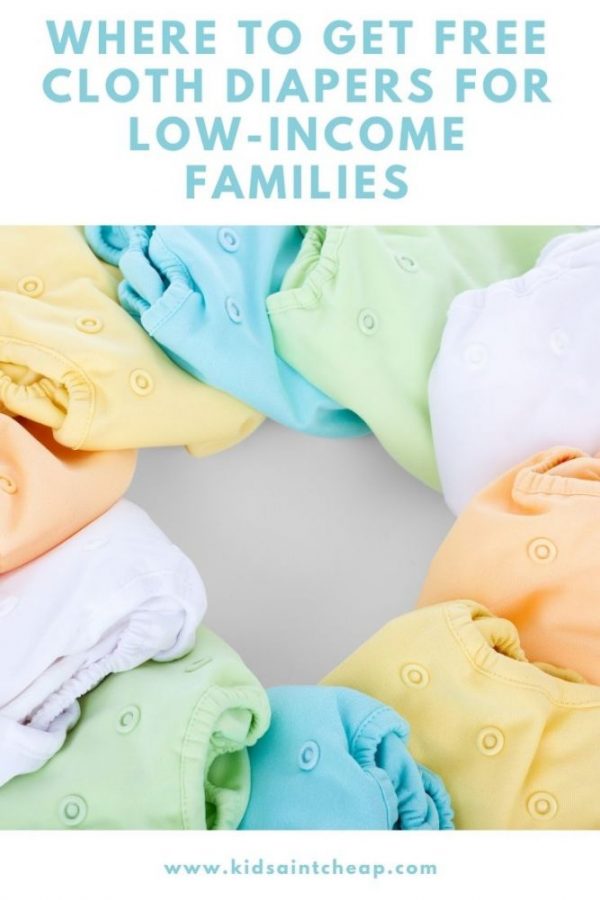
Free Cloth Diapers for Low-Income Families

For families on a tight budget, the blessing of a baby also comes with difficult choices. If they don’t have enough money for the basics, do they choose between diapers for the baby or food for themselves? Some parents have to stretch the diapers in unsanitary ways. They may change their child’s diaper less frequently than they would like or air out the diaper to use again. Parents shouldn’t have to make those difficult decisions. Thankfully, several organizations offer free cloth diapers for low-income families.

Where to Find Free Cloth Diapers

Several organizations offer free cloth diapers, though some do charge a nominal fee for shipping. If you find a diaper bank near you, you can avoid the fee by picking up the diapers directly from the organization.

The Cloth Option

The Cloth Option is a company that will give you enough cloth diapers to diaper your baby for at least a day. Then, you’ll need to wash them for the next day’s use. Newborns will receive 20 diapers, infants 15, toddlers 10. When you’ve potty-trained your child, give the cloth diapers back and get the next size.

To receive the free diapers, you must first fill out an application and provide proof of residency and the baby’s birth or your pregnancy.

Share the Love

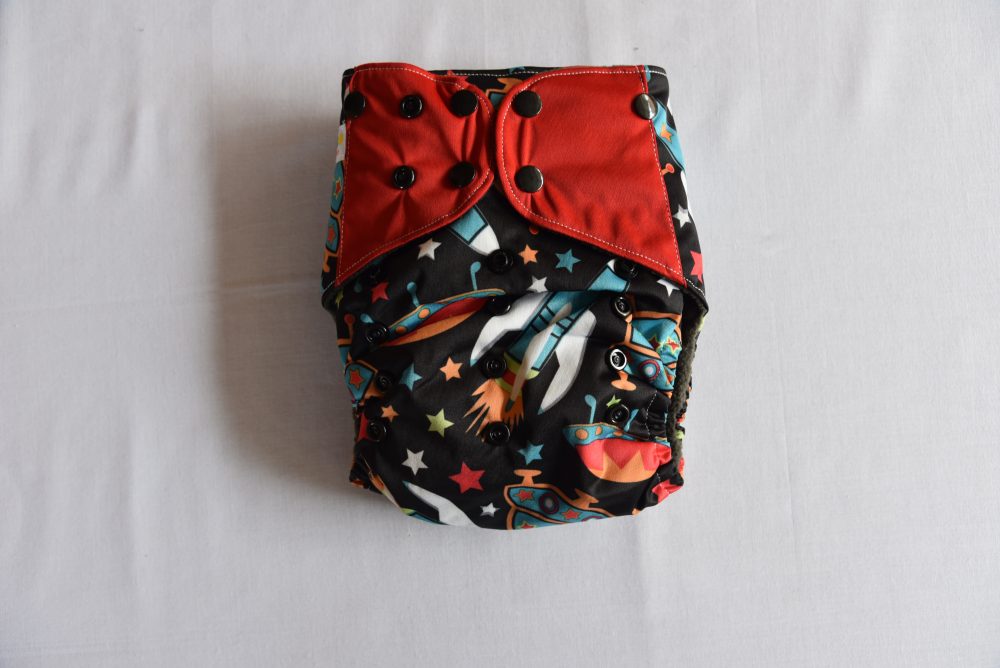
Free Cloth Diapers for Low Income Families
Photo by Padmavathi Ashok Kumar on Unsplash

Share the Love was started in 2012 by a mom, Jennifer Labit, who had only $30 a week plus WIC benefits to both feed her family and buy diapers for her newborn. Thankfully, a friend gifted her with a diaper subscription and then cloth diapers so she could properly care for her baby.

After you apply to Share the Love’s program and are approved, you will receive 15 cloth diapers. You must return these by the time your baby turns three years old. Share the Love has locations in nearly all 50 states.

GroVia Gives

GroVia Gives lends a set of 16 bamboo cloth diaper inserts and four covers for a family to borrow. The diapers should fit a child between 10 to 35 pounds. Parents interested in this program must first fill out an application and show proof of being on WIC and having a child. They also must pay a $40 lending fee, which is partially used for the cost of shipping the diapers.

When you have potty trained your child, send the diapers back. They then receive $20 to spend on the GroVia.com website.

Ask for Cloth Diapers as a Shower Present

When you fill out your baby registry for your baby shower, make sure to add cloth diaper supplies. You may get enough at your shower to allow you to diaper your baby for free throughout his baby and toddlerhood. If you want the diapers to last through multiple children, which they can if you take good care of them, choose gender-neutral patterns.

Final Thoughts

If your money is stretched and you’re choosing between food and diapers, apply to one of these diaper banks. They can give free cloth diapers for low-income families. Then, your money can be used in other needed ways and your baby doesn’t have to suffer from infrequent changes.

Read More

How to Save Hundreds on Diapers

Free Diapers for Low-Income Families

How to Save Money on Diapers

Melissa Batai
Melissa Batai

Melissa is a writer and virtual assistant. She earned her Master’s from Southern Illinois University, and her Bachelor’s in English from the University of Michigan. When she’s not working, you can find her homeschooling her kids, reading a good book, or cooking. She resides in Arizona where she dislikes the summer heat but loves the natural beauty of the area.

Filed Under: Baby Stuff, Freebies for Parents, Money and Finances Tagged With: cloth diapers, Free Diapers, WIC

5 Free Printable Baby Shower Games

May 8, 2017 | 4 Comments

free printable baby shower gamesYou’ve graciously offered to throw a baby shower for someone. Perhaps it’s a friend, coworker, or family member. Well done! It’s a fun time, but planning can be stressful. That’s why I’ve put together a roundup of free printable baby shower games to make the most of the mom-to-be’s special day.

5 Free Printable Baby Shower Games

Name That Baby

This is a game we used at my baby shower. Simply pass out the printable forms with a list of animals and have each guest write the names of baby animals of the same breed. for example, goose and gosling.

Find your printable sheets for “Name That Baby” here.

Name That Nursery Rhyme

This single sheet lists several first lines from famous nursery rhymes. Test your guests and see who gets the most right! The printable sheet and answer key are both at the link below:

Print off your copy of “Name That Nursery Rhyme” here.

Baby Bingo

Baby Bingo is a simple and fun game shower guests of any age can play. Print off several of these bingo cards – blue or pink. Make sure you have game pieces, candy, buttons, or coins for players to use for their cards. In each box, write what the expectant mother could potentially receive at her baby shower. For example, diapers, baby blanket, or lotion.

Call out each item and see who calls “Bingo” first!

Choose your printable “Baby Bingo” cards here.

Baby Shower Scavenger Hunt

A great ice breaker that helps people interact with one another is a scavenger hunt. Ask your guests to form into teams of two or three, then give each team a copy of the first clue. The rest of the clues have been hidden by you throughout the house.

I like this version of a scavenger hunt for a baby shower because each clue is fill-in-the-blank, making the clues more solvable and moving the game along at a nice pace. Make sure you have enough prizes for each team member to receive!

Get your “Baby Shower Scavenger Hunt” clues here.

Baby Shower Charades

Could you stand up in front of your friends and describe “Mary Had a Little Lamb” without using words? Try this fun version of charades that centers around popular nursery rhymes. Cut up each choice and have each guest draw one out of a hat to act out.

You can choose a different theme for charades, of course. You can have your guests act out baby-related things like going into labor, swaddling a baby, or having your water break. Oh, the possibilities for fun…

Print off your nursery rhyme-themed “Baby Shower Charades” here.

If you’re looking for more free printable baby shower games or need help putting together your theme, invitations, or snack ideas, then be sure to check the wealth of resources on Pinterest. These five games should help your guests break the ice and enjoy their time making memories and honoring their friend.

Next Up: “5 Quality Baby Items That Are Worth the Investment”

Which baby shower games have you played? Share a favorite with us below!

Image Credit: jdurham (MorgueFile)

Planning on staying home after your baby is born? Check out our top financial resources for stay-at-home moms:

  • 10 Steps to a Successful Stay-at-Home Mom Budget
  • How to Afford Your Dream of Becoming a Stay-at-Home Mom
  • 14 Online Jobs for Stay-at-Home Moms (That Are Worth Your Time)
  • 13 Ways for Stay-at-Home Moms to Save Money
  • Loans for Stay-at-Home Moms – What Are YOUR Options?
  • The SAHM Budget Test: How to Afford to Be a Stay-at-Home Mom
  • How to plan your finances properly when a baby is on the way

Filed Under: Baby Stuff, Freebies for Parents, Random Musings, Stuff to Do Tagged With: baby shower bingo, baby shower game printouts, baby shower scavenger hunt, free printable baby shower games, Pinterest

How to Make the Most of Your Baby Registry

November 2, 2010 | Leave a Comment

Ideas for what to list on your baby shower registryOne of the most exciting things about having a new baby is preparing for their arrival. Suddenly, you have to prepare your home, as well as yourself and for family, for an extra person. The best tool that new parents have at their disposal is the baby registry.

Whether you have been looking forward to this moment since childhood or find it a tacky practice, a baby registry is an excellent way to get the things you need. People want to give you gifts, whether you like it or not. Think of a baby registry as if all the people who will buy you gifts got together and decided to get things that matched, things you wanted, and just enough of what you need.

A baby registry can be a lot of fun, but if you fill it with impractical things, you will get less of what you actually need. Here are some tips to make the most of your baby registry:

Figure out what you’ll actually need

There are lots of adorable and completely impractical things for sale in the baby aisle. These are things that you and your partner can buy the baby yourselves.

Furniture

You will need a place for the baby to sleep, for example. Don’t forget crib sheets and bumper sets. You will also need a car seat (you often can’t leave the hospital without one) and a safe place to set down your baby during the day.

Clothing

Only register for the bare minimum. Some people will not buy off of your registry. Those people will buy you clothes. If you register for as many clothes as you’ll actually need, you’ll end up with a lot more than you need.

Diapers

This includes wipes, diaper cream and other diapering aides. Decide on a brand, and register for a couple bags of each size.

Food

Whether you plan to breast feed or to bottle feed, you will need some stuff. Bottles, nipples and formula are basic for bottle-feeding, and breast feedings moms might need a pump and storage containers. Once the baby is used to eating solids, Hipp baby food and similar products are also something to look out for.

Start Researching Early

You’ll want to have your baby shower a month or longer before you are due. You’ll want to give your guests at least four weeks to buy a gift. And it might take you a month to decide on all the brands you want. So you should start this process as early into your pregnancy as possible.

When deciding on what store to register at, there are several things to keep in mind. You want a store that is accessible not only to you but to your loved ones as well. Online shopping is handy as well. A large chain store might be your best bet if your family is spread out.

Talk to Other People

Ask for suggestions

A pregnant woman is inundated with “helpful” tips by nearly every other woman on the planet. It becomes hard to keep track of who suggested what, but try to steer these conversations towards what you should register for. Fellow moms will help you remember the little things that you might not realize you need: like a bottle brush or gas relief medication.

Tell People

The whole purpose of having a registry is to tell people what you need for the baby. So you have to make sure you tell the people where it is! Have family and friends spread the word for you, post it on social media networks, and add the information to your baby shower invites.

Brian
Brian

Brian is the founder of Kids Ain’t Cheap and is now sharing his journey through parenthood.

 
Email • Google + • Facebook • Twitter

Filed Under: Baby Stuff, Baby Stuff Tagged With: baby clothes, baby food, baby furniture, baby registry, Baby Shower, Diapers, gift registry, preparing for baby

  • Facebook
  • Pinterest
  • RSS
  • Twitter
Best Parenting Blogs

Most Popular

Baby

10 Baby Names That Were Once Considered “Grandparent Names” but Feel Cool Again

Evan Morgan
Baby

9 Baby Names Inspired by Fall Without Naming Your Child Autumn

Evan Morgan
Baby

10 Vintage Baby Names That Sound Surprisingly Modern Again

Evan Morgan
Baby names

Teachers Admit: These 6 Baby Names Create Instant Bias in the Classroom

Latrice Perez
6 Baby Names That Sound Cute Now but Cause Problems Later

6 Baby Names That Sound Cute Now but Cause Problems Later

Brandon Marcus

All content on Kids Ain’t Cheap is for entertainment purposes only. By reading this blog, you agree that Kids Ain’t Cheap is not responsible for any actions taken after reading this blog. For the full disclaimer, see our privacy policy.

Please note that Kids Ain’t Cheap has financial relationships with some of the merchants mentioned here. Kids Ain’t Cheap is funded by banner advertising, commission sales and search optimization consulting.

Copyright © 2006–2026 | District Media | All Rights Reserved | Privacy Policy

Copyright © 2026 Runway Pro Theme by Viva la Violette