• Home
  • About Us
  • Toolkit
  • Archives
  • Advertise
  • Privacy Policy

Kids Ain't Cheap

But They Sure Are Worth It

  • Parenting
    • Baby Stuff
    • Books and Reading
      • Aesops Fables
      • Comic Books
    • Education
    • Family Time
    • Green Living
    • Growing Up
    • Healthy Living & Eating
    • Holidays
    • Parenting
    • Random Musings
    • Shopping
    • Stuff to Do
  • Money
  • Product Reviews
    • Books and Magazines
    • Discount Sites
    • Furniture
    • House Keeping
    • Reviews News
    • Toys and Games
  • Contact Us
  • Our Editorial Commitment
  • Search

Would You Let Your Child Add Whatever They Want to Your Online Shopping Cart?

September 11, 2026 | Leave a Comment

Family Shopping Online
</strong> Allowing children to add items to an online cart can teach them about budgets, needs versus wants, and the consequences of impulse purchases. Setting a spending limit keeps parents in control while giving kids valuable financial practice. (Pexels).

Hand your child your phone and tell them, “Put whatever you want in the cart.”

What happens next might tell you more about their relationship with money than another lecture about saving ever could. Maybe they add $8 snacks, a $40 hoodie, $75 sneakers an influencer wore, and a collectible they were desperate to own last week but have barely mentioned since. Nothing has been purchased yet, so there’s little financial risk in seeing what they choose. But before checkout, that virtual cart can become a surprisingly useful lesson about prices, advertising, wants versus needs, and what happens when the total exceeds the family’s budget.

That’s increasingly relevant when parents themselves are struggling with pressure to spend. NerdWallet’s 2026 back-to-school survey found that 25% of shoppers expect most of their purchases to be non-necessities requested by their children, while 19% expect to take on credit-card debt for back-to-school shopping.

Give Them a Budget Before You Give Them the Cart

“Choose whatever you want” teaches a very different lesson from “You have $50—decide how you want to spend it.” Suppose your child wants a $35 sweatshirt, $20 headphones, and a $15 game. Suddenly, the $50 limit requires an actual decision: keep the sweatshirt and game, find cheaper headphones, give something up, or contribute some of their own money.

That’s much closer to how adult budgeting actually works.

Fidelity recommends using everyday exchanges involving money as learning opportunities and specifically cautions against shielding children from what things cost. Its guidance also encourages parents to help children understand wants versus needs and incorporate them into budgeting decisions. Instead of immediately saying yes or no to each item, ask, “If you can only choose two, which two matter most?”

Kids May Have More Influence on the Family Budget Than Parents Realize

Children don’t need access to a credit card to affect how much a household spends. NerdWallet found that 25% of 2026 back-to-school shoppers expect the majority of their purchases to be non-necessities their children requested. The same survey found 43% of parents would be willing to take on debt for back-to-school purchases that help their child fit in socially, while 45% would consider debt for extracurricular activities their children want. Those findings point to a financial pressure that goes beyond ordinary nagging for a toy.

Parents may be balancing a desire to set financial limits against worries that their child will feel excluded because classmates have certain shoes, electronics, clothing, activities, or other products. Letting a child build a cart can actually expose some of that pressure and give parents an opening to ask why a particular item feels important. “Everyone at school has it” may lead to a much more valuable conversation than simply clicking “remove.”

Teach Kids to Recognize When They’re Being Sold Something

Children’s wish lists don’t develop in a vacuum. They encounter products through traditional ads, influencers, unboxing videos, games, social-media feeds, sponsored posts, and recommendations woven directly into entertainment. The Federal Trade Commission has warned that children and teens don’t always recognize advertising when it’s blended into surrounding content, such as an influencer featuring a product or an advertisement embedded in a game.

That’s an opportunity for parents to teach a skill that matters well beyond childhood: Who wants me to buy this, and why?

When your child adds something trendy, ask where they heard about it. If the answer is TikTok, YouTube, a streamer, or an influencer, look at the content together and discuss whether it’s advertising, a genuine recommendation, or something in between. Common Sense Media recommends helping kids question why an advertisement was created, what message it sends, and what information it leaves out.

Make Them Comparison Shop Before Checkout

Finding something you want isn’t the same as finding a good deal. If your child adds a $40 water bottle, challenge them to find three comparable alternatives. Compare price, size, reviews, shipping costs, return policies, and whether the cheaper product actually meets the same need. You can even offer an incentive: If you find a comparable version for $25 instead of $40, you can keep $5 of the $15 savings.

Now the child has a reason to comparison shop instead of assuming the first product an algorithm shows them is the best choice. This also introduces an important adult financial concept: spending less doesn’t always mean buying the cheapest item. A $25 backpack that lasts three years can be a better value than a $15 backpack that needs replacing before the school year ends.

Put Nonessential Purchases Through a 24-Hour Test

Online shopping removes much of the friction that once existed between wanting something and buying it. Greenlight’s 2025 Family Trends Report found spending at TikTok Shop among its families increased more than 50% year over year, with an average spend of $20.09. The company now specifically advises families to discuss impulse buying, fake urgency, one-click purchasing, and the blurred line between social-media content and commerce.

One simple defense is to create a household rule: nonessential purchases stay in the cart for 24 hours. Don’t remind your child what’s waiting there. When you return the next day, ask whether they still want each item badly enough to spend part of their budget on it. Something that seemed essential during an exciting video may look considerably less important after the emotional pull has faded.

Don’t Let a Shopping Lesson Become an Unauthorized Purchase

Giving children freedom to browse shouldn’t mean giving them unrestricted access to the household’s money.

Review saved payment methods, one-click purchasing, app-store settings, subscriptions, in-app purchases, and parental controls before handing over a device. This isn’t a theoretical concern: the Federal Trade Commission previously required Fortnite maker Epic Games to pay $245 million to settle allegations that design practices led consumers to incur unwanted charges and allowed children to make purchases without parental involvement.

The lesson shouldn’t be “here’s Mom’s credit card—try not to spend too much.”

Younger children can make wish lists while a parent controls checkout. Older children might receive a defined allowance or spending limit and gradually gain more independence as they demonstrate that they can compare prices, recognize advertising, stay within a budget, and accept that sometimes the answer is no.

Sometimes a $12 Mistake Is Worth More Than a Lecture

Imagine your child has $30 of their own money and desperately wants a $12 gadget you suspect will disappoint them. If the purchase is safe, age-appropriate, doesn’t involve a subscription, and won’t create a significant financial problem, letting them buy it may sometimes teach more than stopping them. The gadget arrives. It’s smaller than expected, poorly made, or simply boring after two days.

Now the child has $18 instead of $30 and firsthand experience with buyer’s remorse.

Parents don’t need to deliberately encourage bad decisions, but rescuing children from every small financial mistake can prevent them from experiencing consequences while the stakes are still low. Learning that an impulsive $12 purchase was disappointing at age 12 is considerably cheaper than learning the same lesson through a $1,200 credit-card balance at age 22.

Try the Cart Challenge

The next time you’re placing a household order, consider turning the cart into a small experiment. Give your child a realistic spending limit and let them choose several nonessential items without commenting on each choice. Before checkout, have them identify each item as a need or want, explain why they chose it, find at least one competing price, and remove enough items to stay within the budget. Then leave the remaining nonessential purchases in the cart overnight.

The point isn’t whether your child ultimately chooses the item you would have chosen. It’s whether they begin connecting the seemingly effortless act of tapping “add to cart” with the very real money that disappears when someone eventually taps “place order.”

Would you give your child $50 and let them decide exactly what stays in the cart, or would you still want final say over every purchase? Share your approach in the comments.

What to Read Next

Stop Buying Your Kids Things Just Because You Didn’t Have Them Growing Up

8 Things Parents Should Stop Buying Once Their Kids Are Old Enough to Earn Money

The Grandparent Spending Problem: What to Do When They Keep Buying Your Kids Everything

Evan Morgan

Evan Morgan has been a full-time freelance writer and editor for 10+ years. When not working, he enjoys catching the latest true crime documentary or getting lost in a good book.

Filed Under: Parenting Tagged With: budgeting, digital parenting, family finances, financial literacy, kids and money, online shopping, Parenting, Saving Money

How To Save A Ton of Money by Trading Your Kids’ Old Clothes

January 8, 2020 | Leave a Comment


How To Save A Ton of Money by Trading Your Kids' Old Clothes

Kids grow fast. The speed at which they grow often means they only get a handful of wear out of brand-new jeans before their ankles start making an appearance. Buying new clothes at a rapid case is a sure way to go broke. It’s also wasteful. The good news is that most moms are in the exact space you are. Trading your kids’ old clothes can save a ton of money. Here’s how to do it.

Three Ways To Save Money by Trading Your Kids’ Old Clothes

1. Host a Clothing Swap

A clothing swap is a great way to not only save money by finding new-to-you clothes for your children; it’s a great way to socialize and meet new people with similar interests.

Invite your friends with kids roughly the same age (or size) as yours. If your kids attend school, you can send an invite through their classroom. Ask everyone to bring a few gently used items of clothing for a swap. 

As everyone arrives, collect the donated items of clothes. Give everyone a ticket for the number of things they brought. As they browse the merchandise, they can turn in their tickets for new-to-them clothes. 

2. Consignment Shop

By swapping clothes at a consignment shop, you can not only save money, but you may also even make a little.  

Once a month, I take a bin of clothes to two consignment shops in my town. I’ve collected the clothes all month as I’ve done laundry and noticed things don’t quite fit anymore. I also strategically save holiday and seasonal items until a few months before, as the shops are more likely to purchase at that time.  

The consignment shop will sort through my bin based on what meets their qualifications. They’ll offer cash for the items they want, or a 20 percent bump if I choose store credit instead. Depending on if I need new clothes for my kids, I may choose the store credit and grab some items they may be lacking. What they don’t take, I’ll hit up at the next consignment shop, or take directly to goodwill.  

Occasionally, I’ll take the cash and apply it to whatever financial goal I’m currently working on.

3. Selling Online

Selling online has become much more sophisticated since the days eBay first came on the scene. It’s more convenient, especially if you tend to have higher-end clothes or clothes with tags.

Think about the clothes you receive for your kids from Grandma and Grandpa that never get worn because they’re already too small. Sell them online, then use that cash to subsidize the cost of new clothes. Better yet, make that cash go further buying gently used clothes either on the same site you sold to, or a consignment shop. 

Some of my favorite online resources for selling kids’ clothes are Kidizen, ThredUp, and Josies’ Friends.

Do you have a favorite method to save money on kids’ clothes? Share with us in the comments below.

Read more:

Here Are the Best Online Shopping Sites for Affordable Kids Clothes

Save Money And Host A Clothing Swap

Kid’s Clothing Consignment Sales: Are They Really Worth It?

Kate Fox

Kate Fox is a former CPA, with twenty years of experience in public accounting and corporate finance. Born and raised in Alaska, Kate is currently based out of southeastern North Carolina.  She loves coaching others on personal finance and spends her free time traveling with her family or relaxing by the pool with a good book, probably about money.

Filed Under: Growing Up, Money and Finances, Parenting, Secondhand Stores Tagged With: consignment shops, kids clothes, online shopping, save money

My Paribus Review: Is Paribus Receipt Fetcher the Next Money-Maker for Your Family?

March 6, 2017 | Leave a Comment

Paribus reviewAccording to a Pew Research Center survey, 79 percent of Americans made online purchases in 2016. Fifty-one percent purchased something on their cell phones. Parents make up a massive percentage of those shoppers, so that’s why I’ve put together this Paribus review. It’s here to help you find ways to earn cash back on those online purchases this year.

My Paribus Review: Is Paribus Right for Your Family?

If you’re handy with your smartphone, you probably already use money-saving apps like RetailMeNot, Swagbucks, or Walmart’s Savings Catcher, but there’s a new kid in town called Paribus, and it’s different than any other app you’ve tried.

What Is Paribus?

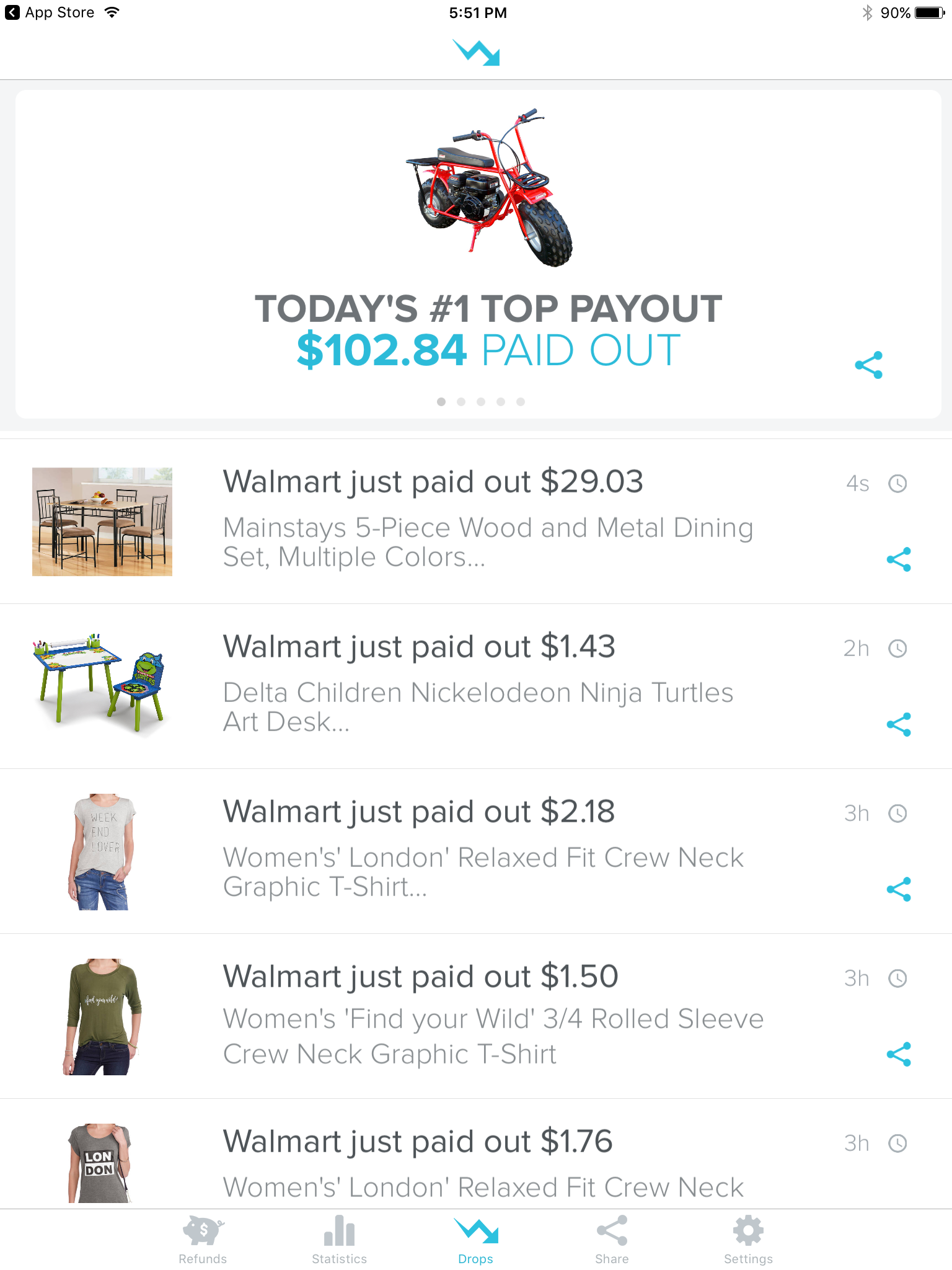
Paribus is an app available to all Apple devices and is free to download. Every time you shop online, Paribus automatically scans your digital receipt to see if there are purchases eligible for cash back over the subsequent weeks.

For example, let’s say you bought your son a $60 LEGO kit at Walmart.com for his birthday last week, but you’ve just noticed the price dropped to $40! Paribus automatically contacts Walmart to find out if you can get that $20 refunded. If they agree, then you get 100% of that refund!

Not bad for doing basically nothing, right?

What Are the Benefits and Drawbacks to Using Paribus?

It goes with the territory that every new product has its pros and cons. Your days are filled with tending to kids, running your household, and keeping your head on straight. My job is to help you make an informed decision about products that may or may not benefit your family as honestly as I can.

Therefore, here are the benefits and drawbacks I observed when using Paribus.

BENEFITS

It’s free. From the moment you download the app to your first cash back alert, there are no charges or hidden fees. Although, you do have to spend money shopping online, obviously! 

It could be great for the holidays. Last Christmas, I asked a group of moms to share their favorite way to go Christmas shopping and the majority answered, “Online.” If you rack up most of your holiday spending money with online retailers then you could be in for some cash back on some of those purchases.

DRAWBACKS

You have to share quite a bit of private information with Paribus. Like I said earlier, I want to be totally honest in this review, so I need to share one drawback that gave me considerate pause at first. Paribus will have authority to read, send, delete, and manage your email. They also request your Amazon login and password, as well as your credit card information.

I worked for years in fraud prevention at a financial institution, so those were automatic red flags to me. I dug in and researched user experiences since the app’s inception in 2014. Despite the scary amount of personal information, I did not read one report of fraudulent activity or compromised information from users.

IMG_0231 (2)

I’m just reviewing this product as a consumer and don’t have authority to ensure this software is secure, but you can hear directly from Paribus and learn more details about how they handle our information via this CNBC report.

Watch out for hiccups. I experienced a technical bug when I tried to sync my Amazon account with Paribus. Upon further research, I discovered several other complaints about technical hiccups like that. I’m sure they’re updating and ironing out bumps all the time, but just be aware that those may cause some delays.

Not every purchase or store is eligible. A number of users complained that Paribus only pays back on eligible stores and purchases, so their cash back wasn’t as much as they hoped. Considering your family’s needs over the course of this year, you may want to evaluate where you’ll be shopping for them and how often. Paribus updates the list of eligible retailers regularly.

Paribus Review – Final ThoughtsIMG_0235

The million dollar question is this: Did I actually get cash back using Paribus? 

Not yet. I believe the reason is because I shop infrequently online and have only just started using Paribus.

Paribus is a free app that requires minimal upkeep, so if your alright with the parameters discussed throughout this article and you already shop online regularly, then it’s likely this app will make you some money. If you don’t shop a lot until Christmas, then it may still be helpful. If you just don’t shop a lot, ever, then you may not hear much chatter from Paribus.

Are money-saving apps like Paribus a wise replacement for good financial habits? Not at all. We use terms like “personal finance” and “financial living” because you must live out certain principles in order to succeed. Laying a foundation with things like budgeting, saving, and spending less than you make are far and away more important than using the right gadget or app. Are apps still helpful? Yes. But don’t let them tempt you to spend more than you intended to and wreck your foundation.

The Sign-Up Process

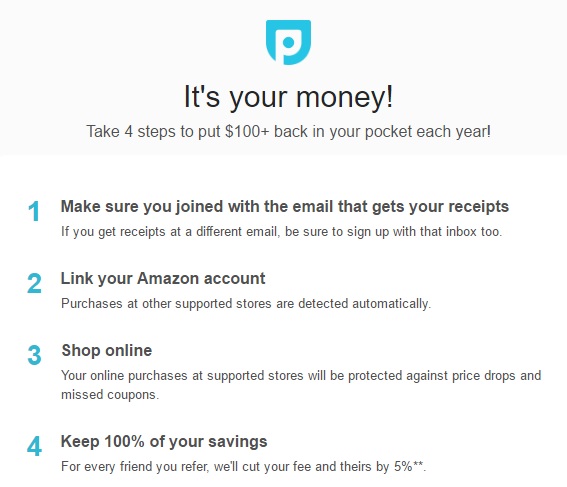
The following four steps taken directly from Paribus’ sign-up page will help you get started:

Paribus I

In other words:

  • Download the app.
  • Sync your info to Paribus.
  • Shop.
  • Get paid.

Where are some of your favorite online stores when you’re shopping for your family? Share one below!

This post was sponsored by Paribus. 

P.S. Are you a stay-at-home mom? Make sure you bookmark or pin some of these resources for later!

  • 10 Steps to a Successful Stay-at-Home Mom Budget
  • How to Afford Your Dream of Becoming a Stay-at-Home Mom
  • 14 Online Jobs for Stay-at-Home Moms (That Are Worth Your Time)
  • 13 Ways for Stay-at-Home Moms to Save Money
  • Loans for Stay-at-Home Moms – What Are YOUR Options?
  • The SAHM Budget Test: How to Afford to Be a Stay-at-Home Mom

Filed Under: Discount Sites, Money and Finances, Product Reviews for Parents, Shopping Tagged With: make money online, online shopping, paribus review, save money online, shopping for your family

How Does Giving Assistant Work?

February 27, 2017 | Leave a Comment

giving assistantI think we can all agree that shopping online is the bees’ knees, right? Not only are online prices super competitive, the “work” of shopping can often be done faster from home. And bonus; the items you buy are delivered right to your front door. As an added benefit, companies like Giving Assistant are actually paying customers to shop online.

That’s right. They give you cash back on the things you buy.

How Giving Assistant Works

The first step is to create a free account with Giving Assistant.

giving assistant II

After you log in to your account, you can start shopping either by store or by category. Each store offers a certain percentage of cash back on purchases. Five percent is the average discount percentage. However, many stores offer discounts of up to 7% and even more, depending on the day.

When you make a purchase, the store pays that cash back to Giving Assistant. If you’re a member, the cash back goes right into your account.

If you’re a non-member, Giving Assistant keeps the cash back and donates a meal to Feeding America. In fact, Giving Assistant donates a meal to Feeding America for every single qualified purchase.

As a bonus, Giving Assistant informs buyers of any online coupons that can help bring their purchase price even lower. When you combine coupons with cash back bonuses you save even more money on the things you buy.

How to Receive Your Cash Back Bonuses

As you accumulate cash back rewards, the site allows you to transfer those rewards to a debit card through Paypal. You’ll have the option to transfer your money once you’ve earned at least $5.01 in bonus cash. No waiting for checks to come in the mail or trying to reach high minimum payout balances.

Giving Assistant pays out pretty quickly as well – often within one business day when using Paypal’s secure site.

Giving to Charity through Giving Assistant

When members earn cash back, they also have the option of donating some or all of their earnings to charity. Members can choose from hundreds of non-profit organizations to donate to, such as Feed the Children or the Red Cross.

Which Stores Participate?

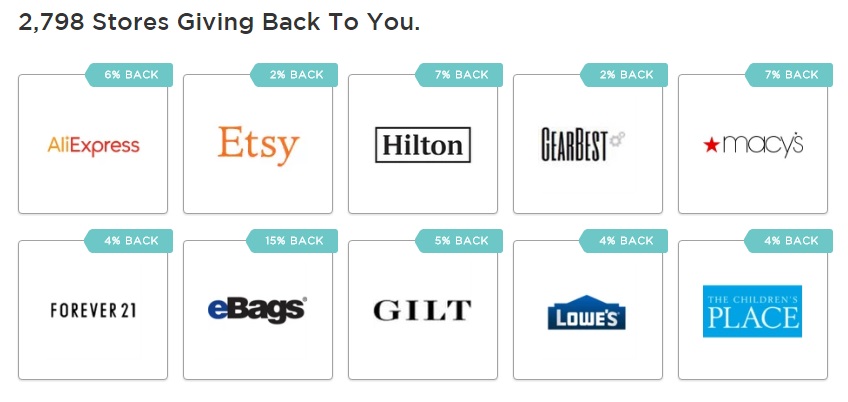
According to their website, Giving Assistant has over 2700 stores participating in its cash back program. Some examples are:giving assistant I

  • Big box stores such as Walmart, Target, Kmart and Kohls
  • Online retailers such as Amazon and Coburn’s
  • Specialty sites such as Etsy, Redbubble, Café Press and Ebay
  • Specialty stores such as Macy’s, Nordstrom, Coach and Ann Taylor


With nearly 3,000 stores to choose from, everyone is bound to find a shopping venue that fits their needs.

In this day and age, people are becoming more mindful of how their purchases affect the world as a whole. With Giving Assistant, shoppers can become a part of a growing conscious capitalism movement.

By combining shopping with charity, you meet your needs and help the less fortunate get their needs met, too.  Shopping responsibly has arrived.

Are you a fan of shopping online? Would you ever try Giving Assistant? Share why or why not below!

ATTN Stay-At-Home Moms: Make sure you bookmark or pin some of these resources for later!

  • 10 Steps to a Successful Stay-at-Home Mom Budget
  • How to Afford Your Dream of Becoming a Stay-at-Home Mom
  • 14 Online Jobs for Stay-at-Home Moms (That Are Worth Your Time)
  • 13 Ways for Stay-at-Home Moms to Save Money
  • Loans for Stay-at-Home Moms – What Are YOUR Options?
  • The SAHM Budget Test: How to Afford to Be a Stay-at-Home Mom
  • Walmart Savings Catcher
  • How Much Do Youtubers Make?

Filed Under: Discount Sites, Product Reviews for Parents, Reviews News, Shopping Tagged With: Amazon, donate money online, giving assistant, how to save money online, online shopping

Online Coupons ~ Spend Less and Get More

November 7, 2011 | Leave a Comment

Coupon
(via capl@washjeff.edu)

I have talked a lot about couponing lately but most of those posts have centered around using coupons in stores — and not really about getting great deals online. While I do try really hard to do the majority of my shopping locally, there are many times when buying online is just so much easier and in some cases, less expensive. Plus, there are many instances when buying online is the only way to find exactly what you are looking for.

One of the great things about shopping online is you can quickly compare prices between several stores. This can help you save a lot of money. Another great thing is that from time to time these online store offer coupon codes. COUPONS — yippee! These codes are usually good for free shipping, a percentage or certain dollar amount off an order and sometimes (if you are super lucky) you can find coupon codes that make items free — or almost free once you add shipping.

How to Find Coupon Codes

So how does one find these elusive coupon codes? It’s actually pretty simple. First of all, here at Kids Ain’t Cheap we have a Family Coupon Code Directory. There you will find many codes to help you save money on everything from baby furniture to audio downloads. Check it often because we get new codes all the time.

Search Engines

Another thing you can do is to do a search for: (your favorite store) coupons before placing an order.

Here’s an example, I was looking for a certain iPhone cover for a friend’s birthday. He wanted his alma mater’s logo and I had no idea where to find such a thing. I first searched for iPhone covers with his former university’s name. The company Coveroo.com came up and had exactly what I was looking for. The price seemed comparable to other covers I had seen — but I wanted to see if I might be able to save just a little bit more more money. On the home page of the site was 20% my order with xyz coupon code. SWEET! I still decided to look via my favorite search engine to see if it might turn up an even better coupon. Guess what — it did! So not only was I able to save 20% I also got free shipping. I was so please that when I was asked if I wanted to include personalization on the cover (my husband’s name) I said, “Heck yes I do!” So I got more that I had anticipated and still ended up spending less than I thought I would.

There are a lot of other ways to find coupon codes as well. If you love a certain brand, item, store, etc. sign up for their newsletters. It is a good idea to have a separate email account that you have these types of emails set to that way your personal email account does get overloaded.

Facebook

Also, if you “like” certain pages on Facebook you can sometimes get printable coupons or coupon codes periodically. I have been waiting for a Petco coupon for while and haven’t seen any come through. My dog’s food is kind of spendy (but she’s so worth it!), so I try to stock-up when I find coupons for the food, which are extremely hard to come by. However, in my news feed on Facebook the other day there it was a coupon code! If I hadn’t “liked” their page I wouldn’t have seen it. If you are on twitter you can also follow certain brands and stores and some of them will periodically post special offers and coupon codes as well.

Coupon blogs

I have also talked a lot about following coupon blogs. These folks will also post details about online deals as well. This can come is especially handy with the holidays just around the corner!!! Speaking of the holidays shopping online can save you a trip to the post office and many online retailers offer free shipping during this time of year to entice you to buy from them.

So what are some of your favorite ways to save online?

Brian
Brian

Brian is the founder of Kids Ain’t Cheap and is now sharing his journey through parenthood.

 
Email • Google + • Facebook • Twitter

Filed Under: Money and Finances, Shopping Tagged With: Coupons, Coveroo, online shopping

  • Facebook
  • Pinterest
  • RSS
  • Twitter

Basic Principles Of Good Parenting

Here some basic principles for good parenting:

  1. What You Do Matters: Your kids are watching you. So, be purposeful about what you want to accomplish.
  2. You Can’t be Too Loving: Don’t replace love with material possessions, lowered expectations or leniency.
  3. Be Involved Your Kids Life: Arrange your priorities to focus on what your kid’s needs. Be there mentally and physically.
  4. Adapt Your Parenting: Children grow quickly, so keep pace with your child’s development.
  5. Establish and Set Rules: The rules you set for children will establish the rules they set for themselves later.  Avoid harsh discipline and be consistent.
  6. Explain Your Decisions: What is obvious to you may not be evident to your child. They don’t have the experience you do.
  7. Be Respectful To Your Child: How you treat your child is how they will treat others.  Be polite, respectful and make an effort to pay attention.
Best Parenting Blogs

Most Popular

Baby

10 Baby Names That Were Once Considered “Grandparent Names” but Feel Cool Again

Evan Morgan
Baby

9 Baby Names Inspired by Fall Without Naming Your Child Autumn

Evan Morgan
Baby

10 Vintage Baby Names That Sound Surprisingly Modern Again

Evan Morgan
Baby names

Teachers Admit: These 6 Baby Names Create Instant Bias in the Classroom

Latrice Perez
6 Baby Names That Sound Cute Now but Cause Problems Later

6 Baby Names That Sound Cute Now but Cause Problems Later

Brandon Marcus

All content on Kids Ain’t Cheap is for entertainment purposes only. By reading this blog, you agree that Kids Ain’t Cheap is not responsible for any actions taken after reading this blog. For the full disclaimer, see our privacy policy.

Please note that Kids Ain’t Cheap has financial relationships with some of the merchants mentioned here. Kids Ain’t Cheap is funded by banner advertising, commission sales and search optimization consulting.

Copyright © 2006–2026 | District Media | All Rights Reserved | Privacy Policy

Copyright © 2026 Runway Pro Theme by Viva la Violette